
CCIP 2.0 is officially live, and CCIP 2.0 is positioning itself around a much bigger target: infrastructure for the next $600 trillion in onchain finance. The pitch is straightforward. Cross-chain infrastructure needs security, compliance, and speed without forcing institutions back into fragmented systems.
CCIP 2.0 Targets Institutional Cross-Chain Finance
Interoperability has traditionally meant choosing between legacy bridges that have been exploited for more than $3.3 billion or spending over six months on custom engineering for each chain.
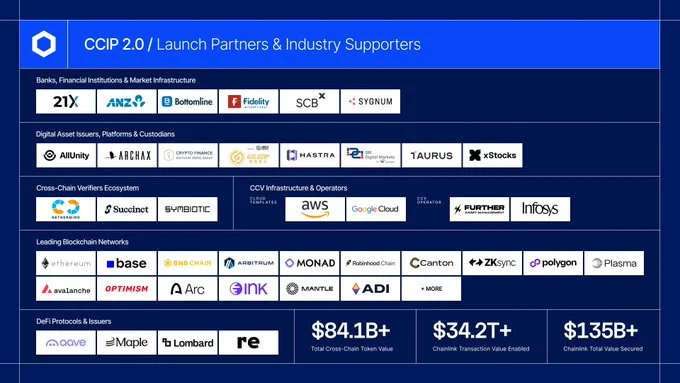
CCIP 2.0 introduces institutional risk controls through custom Cross-Chain Verifiers, or CCVs. These can be deployed within Amazon Web Services and Google Cloud, while enterprise operators including Infosys and Nethermind can also provide verification.
The system also gives asset issuers more control over settlement. High-frequency transfers can use faster execution paths, while high-value transactions can require full finality and time-delayed approvals.

Chainlink Adds Compliance Directly Into Transfers
Compliance is another major piece of CCIP 2.0. Native integration with Chainlink ACE allows policy controls to be embedded directly into cross-chain transfers.
That includes issuer-defined KYC, AML, sanctions screening, allowlists, and exposure limits.
It’s a notable shift from treating compliance as something handled around infrastructure. Here, the controls are designed to sit inside the transfer process itself.
$84B Cross-Chain Value Already Secured
CCIP now has more than $84 billion in total cross-chain token value secured, while more than $15 billion is migrating to the infrastructure.
That migration includes BitGo’s WBTC, Coinbase’s cbBTC, and Kraken’s kBTC.
The development has also drawn support from major crypto networks and protocols, including Arbitrum, BNB Chain, Polygon, Aave, and ZKsync.
LINK Utility Could Become Harder To Ignore
That puts Chainlink’s LINK token into an interesting position. The provided data doesn’t establish a specific LINK price target, but expanding CCIP adoption could increase the importance of the token within the broader Chainlink ecosystem.
With CCIP 2.0 targeting regulated assets and institutional liquidity across onchain markets, targets like $50 are bets of many based on demand for LINK but going to $100 or even $200 for LINK/USD may no longer sound as distant to market participants. Still, those are over ambitious price targets, not outcomes established by the data and its solely an hypothesis only if unimaginable demand follows.
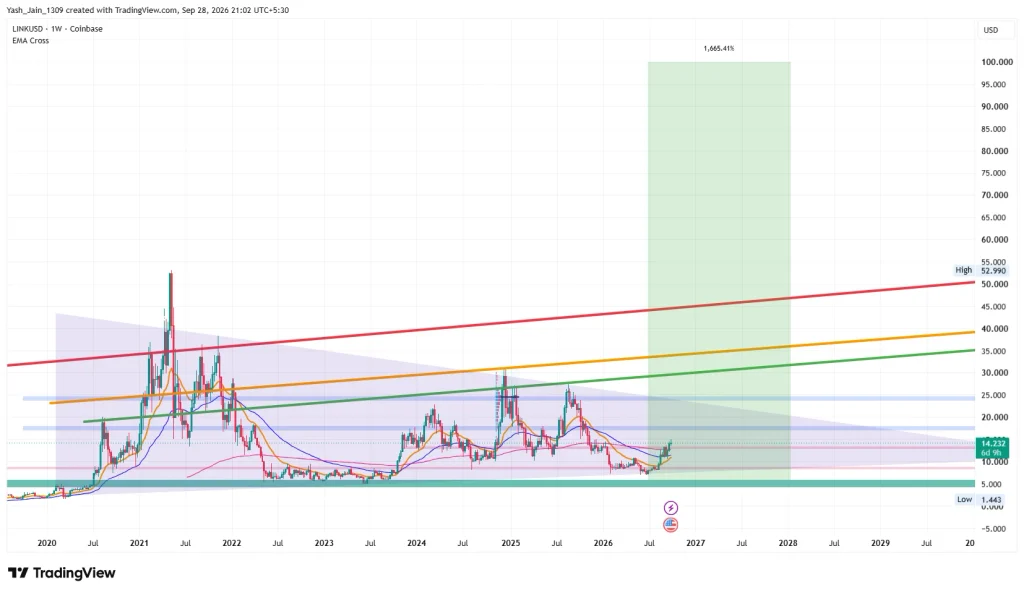
For CCIP 2.0, the bigger story is whether this infrastructure can become the neutral interoperability standard for hundreds of trillions of dollars in assets moving onchain.
Was this writing helpful?
Story Ends Here
Trust with CoinPedia:
CoinPedia has been delivering accurate and timely cryptocurrency and blockchain updates since 2017. All content is created by our expert panel of analysts and journalists, following strict Editorial Guidelines based on E-E-A-T (Experience, Expertise, Authoritativeness, Trustworthiness). Every article is fact-checked against reputable sources to ensure accuracy, transparency, and reliability. Our review policy guarantees unbiased evaluations when recommending exchanges, platforms, or tools. We strive to provide timely updates about everything crypto & blockchain, right from startups to industry majors.
Investment Disclaimer:
All opinions and insights shared represent the author’s own views on current market conditions. Please do your own research before making investment decisions. Neither the writer nor the publication assumes responsibility for your financial choices.
Sponsored and Advertisements:
Sponsored content and affiliate links may appear on our site. Advertisements are marked clearly, and our editorial content remains entirely independent from our ad partners.
Read the Next News