
Artificial intelligence is entering a new phase where systems are evolving from answering questions to autonomously completing real-world tasks. Rather than simply generating text or images, AI agents are increasingly being designed to search for information, interact with software, coordinate with other agents, and execute financial transactions on behalf of users.
This shift is driving the emergence of what industry participants describe as the Agentic Internet, which is an ecosystem where autonomous software agents communicate, access enterprise data, and complete transactions with minimal human intervention. Unlike today’s app-centric internet, this model relies on standardized communication protocols, secure data access, programmable payment systems, and always-on settlement infrastructure.
Several industry leaders, including Google, Microsoft, OpenAI, Anthropic, Coinbase, Stripe, Visa, PayPal, Circle, and major financial institutions, are actively building or testing the infrastructure required for this transition. At the same time, enterprise adoption is accelerating, with organizations increasingly moving beyond AI pilots toward production deployments.
This evolution has important implications for digital assets. Stablecoins, programmable payments, blockchain-based settlement, and machine-to-machine commerce are becoming critical components of autonomous AI systems. While the AI agent crypto sector remains relatively small today, several research firms believe its long-term growth potential could be substantial if enterprise adoption, payment infrastructure, and regulatory frameworks continue to mature.

1. The AI Narrative Is Changing
The first phase of artificial intelligence was largely driven by infrastructure. Investment focused on semiconductors, cloud computing, large language models (LLMs), and hyperscale data centers that made generative AI possible.
A new phase is now emerging. Rather than simply generating responses, AI systems are increasingly being developed to perform tasks independently. These systems are commonly referred to as AI agents that can reason through multi-step workflows, interact with software applications, retrieve information from multiple sources, communicate with other AI agents, and execute actions on behalf of users.
This marks a shift from AI as an assistant toward AI as an autonomous operator.
Examples include:
- Booking travel / Paying bills / Comparing products / Ordering groceries
- Managing investment portfolios / Scheduling meetings / Executing business workflows
Instead of humans manually navigating every application, AI agents increasingly become the interface that interacts with digital services. For investors, this changes where value may accumulate.
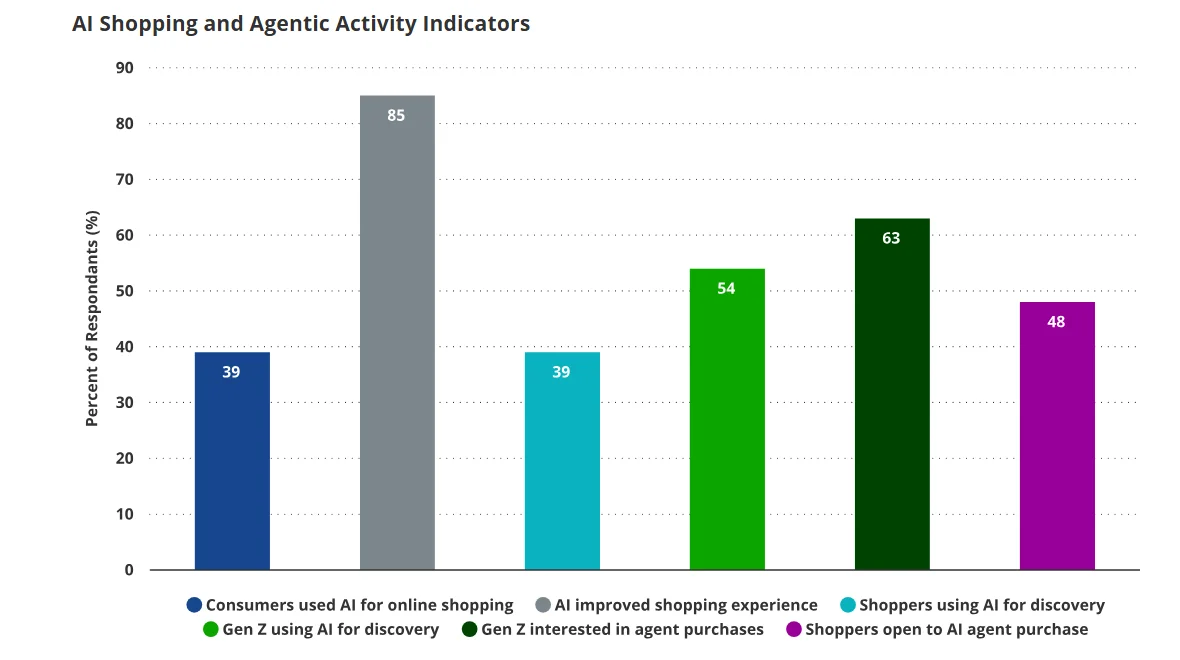
Why This Matters:
| First AI Wave | Emerging AI Wave |
| AI generates content | AI completes tasks |
| Human executes actions | AI executes actions |
| Focus on chips & models | Focus on execution infrastructure |
| User interface dominates | Infrastructure becomes increasingly important |
2. From the App Economy to the Agent Economy
For nearly two decades, digital commerce has revolved around applications. Consumers opened individual apps for various tasks and companies competed by attracting users directly to their platforms and optimizing the customer experience.
AI agents introduce a different operating model. Rather than competing primarily for consumer attention, companies may increasingly compete to become accessible infrastructure for AI agents. This shift increases the importance of payment networks, enterprise integrations, logistics providers, and digital settlement systems.
For example, rather than manually comparing airline tickets, booking hotels, arranging airport transportation, and paying with multiple applications, an AI agent could do all after receiving a single instruction.
Still, the consumer remains responsible for the final decision, but the execution process becomes increasingly automated.
As a result, value may shift away from companies that simply attract user traffic toward businesses that provide the infrastructure enabling transactions.
App Economy vs Agent Economy
| Traditional App Economy | Emerging Agent Economy |
| Users open individual apps | Users issue instructions to AI agents |
| Manual browsing | Automated search and comparison |
| Human completes every step | AI executes approved workflows |
| User interface is primary | Execution infrastructure becomes critical |
| Apps compete for attention | Platforms compete for agent accessibility |
This transition places greater importance on businesses that provide:
- Digital payment infrastructure / Transaction settlement
- Identity verification / Financial services / Data connectivity
- Merchant networks / Logistics systems
These systems increasingly become the execution layer supporting AI-driven commerce.
3. Why AI Agents Need Blockchain Infrastructure
As AI agents become increasingly autonomous, they require financial infrastructure capable of supporting machine-driven transactions.
Traditional payment systems remain highly effective for human commerce but introduce several limitations for autonomous software.
These include:
- Banking hours / Cross-border settlement delays
- High fees for small transactions / Multiple intermediaries / Regional payment fragmentation
AI agents often require a different operating environment.
For example, an AI assistant purchasing API access, cloud resources, or digital services may need to complete thousands of small transactions each day across different jurisdictions.
This is where blockchain infrastructure becomes increasingly relevant. As Stablecoins will provide programmable digital dollars capable of settling transactions continuously without relying on traditional banking systems.
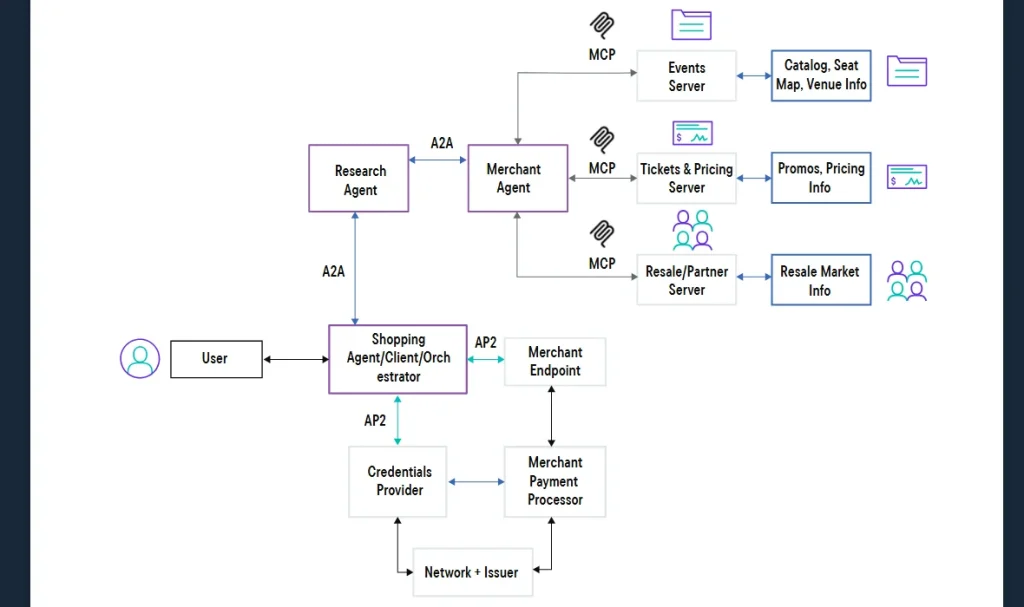
4. The Four Protocols Powering the Agentic Internet
Autonomous AI systems require standardized methods for communicating, accessing information, authorizing transactions, and settling payments.
Several emerging protocols aim to provide this common infrastructure. Together, they form the technological foundation of the Agentic Internet.
| Protocol | Primary Function | Why It Matters | Where it can be used |
| A2A (Agent-to-Agent) | Agent communication | Enables AI systems to collaborate across platforms. A2A establishes standardized communication between autonomous agents. | Potential applications include:research agents,planning agents,coding assistants,customer support automation. |
| MCP (Model Context Protocol) | Data and tool access | Standardizes connections to enterprise software and APIs. MCP provides standardized connectors that allow AI systems to securely access these resources without building custom integrations for every application. | AI agents require access to enterprise systems such as:databases,APIs,spreadsheets,documents,cloud applications. |
| AP2 (Agent Payments Protocol) | Payment authorization | Allows AI agents to execute transactions with verified user consent. AP2 introduces standardized payment authorization through cryptographically signed user mandates. | users define spending rules that agents must follow.Examples include:spending limits,merchant restrictions,recurring payments,transaction approvals. |
| x402 | Stablecoin settlement | Enables programmable, machine-to-machine payments using blockchain. Meaning, Once a transaction is authorized, x402 provides the settlement layer. | Using stablecoins, x402 enables:instant settlement,machine-to-machine payments,API monetization,autonomous subscriptions,programmable commerce. |
Why These Protocols Matter Together
Each protocol addresses a different layer of autonomous commerce. Together, they create the infrastructure required for AI agents to move from generating information to executing real-world economic activity.
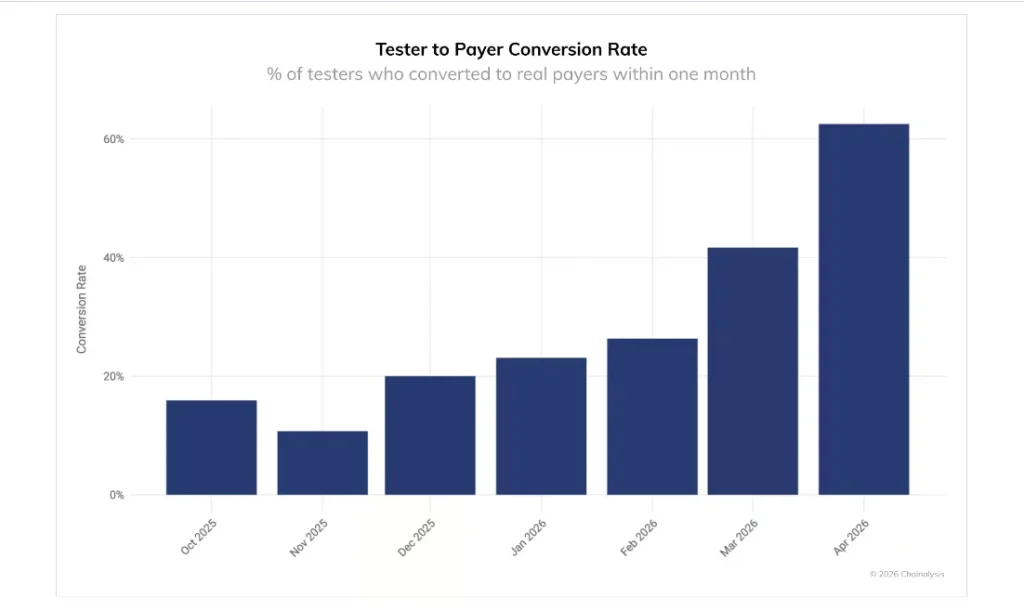
Moreover, a report shows x402 agentic transactions on Base went from near-zero in mid 2025 to over 100 million cumulative transactions in 2026. Also, Testers are transitioning to spenders more than ever before, with the tester-to-payer conversion rate improving by 4x in six months, suggesting that the friction to its adoption has declined.
5. Why Stablecoins Could Become the Default Settlement Layer
Unlike conventional payment rails that rely on banks, clearing houses, and settlement windows, stablecoins offer programmable, always-available digital money that can be integrated directly into AI workflows.
Rather than replacing traditional financial systems, stablecoins are increasingly viewed as the settlement layer that enables AI agents to transact efficiently while existing payment providers continue managing identity, compliance, and user protections.
Industry Adoption Is Already Underway
Several major technology and payment companies like Google, Coinbase, Circle,Visa, Paypal, Stripe, Microsoft, and other have already begun testing infrastructure that combines AI agents with blockchain settlement.
That said, it isn’t wrong to say at this point that stablecoins are increasingly being viewed as complementary infrastructure for autonomous commerce rather than solely as digital assets.
Why programmable dollars matter
- AI agents can execute payments automatically.
- Stablecoins support 24/7 settlement.
- Existing banking infrastructure still relies on operating hours and intermediaries.
- Programmable settlement reduces friction for autonomous software.
6. HTTP 402: A 30-Year-Old Internet Standard Finding a New Purpose
One of the lesser-known developments supporting the AI agent economy is the revival of HTTP 402.
Although HTTP 402 has existed since the early days of the internet, it was never widely adopted, but the rise of AI agents is changing that. Unlike human users, AI agents frequently access APIs, databases, cloud services, and digital content automatically.
Instead of subscribing to every service, agents may increasingly pay only for the specific resources they consume. HTTP 402 provides a standardized framework for this type of interaction.
How HTTP 402 Works
Instead of requiring pre-registered accounts or API keys, the payment process becomes part of the request itself.
The simplified workflow is:
- AI agent requests a digital resource.
- Server responds with HTTP 402 Payment Required.
- Payment instructions are provided.
- The AI agent completes payment.
- Proof of payment is attached.
- The requested resource is delivered.
This creates a pay-per-request model that is particularly well suited to autonomous software.
Evolution of HTTP 402
| Year | Development |
| 1990s | HTTP 402 introduced in the original HTTP specification |
| 2011 | Early Bitcoin payment experiments begin |
| 2014 | Zero Click demonstrates automatic Bitcoin payments |
| 2020 | Lightning Labs launches L402 |
| 2025 | Coinbase introduces x402 protocol |
| 2026 | Tempo and Stripe launch Machine Payments Protocol (MPP) |
The progression illustrates how advances in blockchain infrastructure have made machine-native internet payments increasingly practical.
Why AI Agents Change the Equation
Traditional internet businesses rely heavily on subscriptions or advertising because human behavior is unpredictable. AI agents behave differently. Instead of browsing websites, they typically:
- Receive a task.
- Locate the required service.
- Pay for access.
- Complete the task.
- Move to the next request.
This way it shifts internet monetization from attention-based advertising toward outcome-based payments.
That said, instead of monthly subscriptions, businesses may increasingly charge:
- Per API request.
- Per dataset.
- Per computation.
- Per transaction.
- Per AI workflow.
Such payment models are considerably easier to implement using programmable digital assets like stablecoins than conventional financial infrastructure.
7. Enterprise Adoption Is Accelerating
The rapid development of AI infrastructure is increasingly being matched by enterprise adoption.
Over the past two years, organizations have largely focused on testing AI through limited pilots and experimental deployments.
Industry research now indicates that many enterprises are moving beyond experimentation toward production-scale implementation.
AI Spending Continues to Increase
Boston Consulting Group’s enterprise survey found that nearly 45% of enterprises expect to increase AI spending, including investments in agentic AI capabilities.
Rather than viewing AI solely as a productivity tool, organizations are increasingly investing in infrastructure that enables autonomous workflows across business functions.
These include:
- customer support,
- software development,
- finance,
- accounting,
- insurance,
- healthcare,
- supply chain management.
Enterprises Are Moving Beyond Pilots
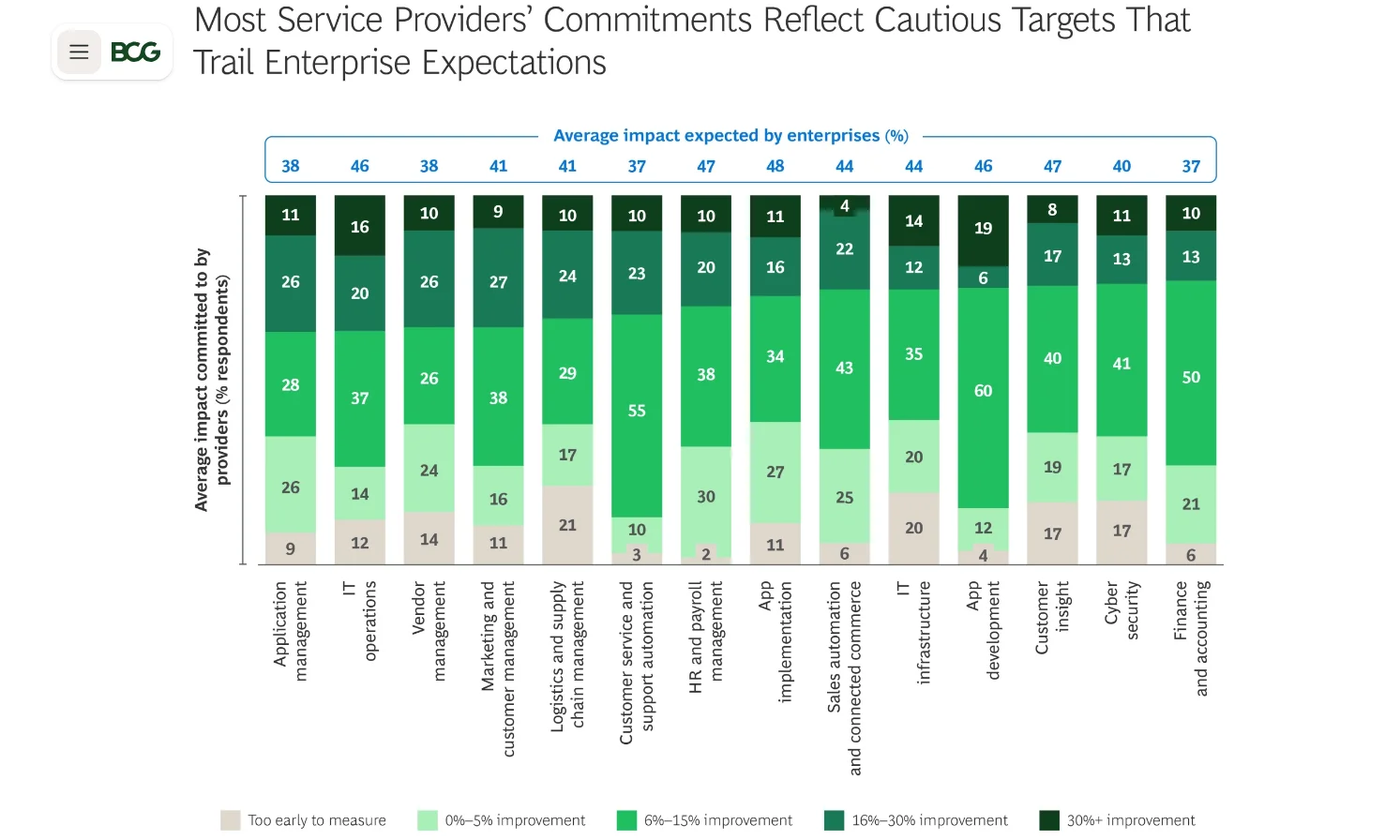
BCG’s research also highlights that:
- More than 40% of large enterprises are already scaling AI implementations.
- Approximately 75% expect to work with service providers to deploy priority AI use cases.
- Banking, financial services, and insurance are among the earliest adopters.
The transition from experimentation to deployment is expected to accelerate through 2026.
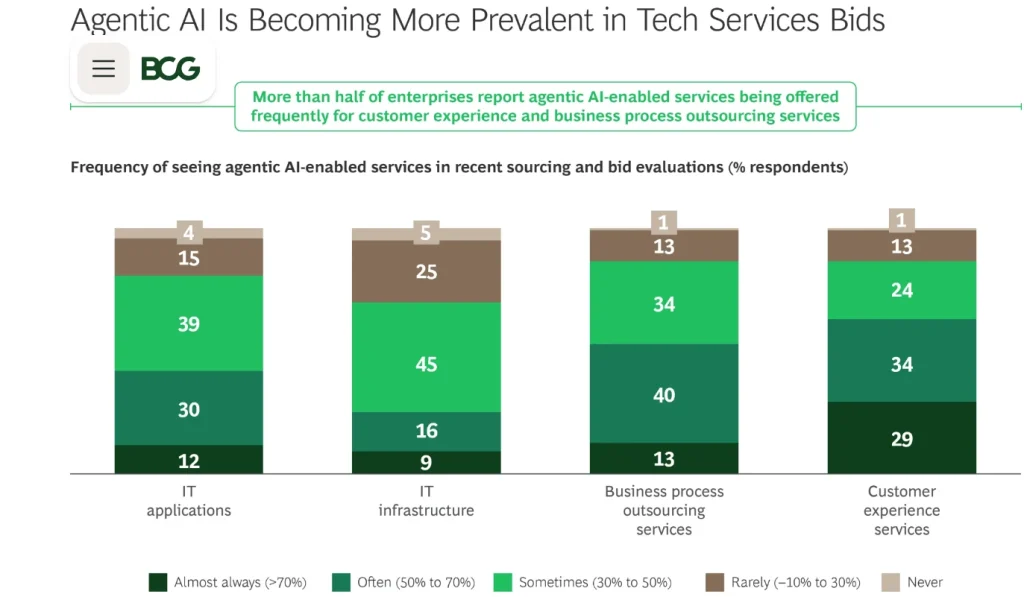
Financial Institutions Are Also Expanding AI Investment
Morgan Stanley’s 2026 U.S. Financials Conference identified AI as one of the major themes influencing the banking sector.
Large financial institutions expect AI agents to improve:
- customer onboarding,
- product discovery,
- workflow automation,
- operational efficiency,
- internal decision-making.
However, executives also emphasized that transaction execution remains dependent on trust, regulation, and secure payment infrastructure.
8A. Current State of the AI Agent Crypto Market
Before discussing a $200 billion opportunity, readers should understand today’s market.
Include:
Current Market Snapshot
| Metric | Current Position |
| AI Agent crypto market cap | ~$2B |
| Total AI crypto sector | ~$25B |
| Development stage | Early infrastructure |
| Primary use cases | Autonomous agents, payments, infrastructure |
8B. Why Analysts See a $200 Billion Opportunity For AI Agent Market Cap
The projected growth of the AI agent market cap is not based solely on cryptocurrency adoption.
Instead, industry forecasts are driven by the expanding demand for enterprise AI services, infrastructure, and autonomous software deployment.
Boston Consulting Group estimates that AI agent market cap could create up to $200 billion in additional addressable market opportunities within technology services by 2030, driven by new enterprise spending rather than cost reduction alone.
Autonomous Agent Infrastructures Drive Sector Re-rating
The 2026 AI token expansion marks a fundamental structural shift from generic compute speculation to programmatic, on-chain utility. Total AI sector market capitalization in July has surpassed $25 billion, led by a surge in dedicated autonomous agent frameworks and per CoinMarketCap AI agent crypto market cap hold $2 billion.
Market velocity is concentrated in ecosystems offering multi-chain interoperability and live developer tooling, such as Virtuals Protocol ($VIRTUAL) capitalizing on its no-code agent console, and the Artificial Superintelligence Alliance ($FET) capturing institutional inflows for modular agent coordination.
Concurrently, network telemetry indicates robust underlying demand for execution layers; NEAR Protocol handles over 5 million daily transactions, heavily driven by its specialized AI agent frameworks and chain abstraction primitives. This rally is structurally insulated by direct macro drivers, notably OpenAI’s in February 2026, which said about $110 billion infrastructure funding injection, cemented decentralized agent economies as institutional proxies.
Where New Revenue Is Expected to Come From
Rather than replacing existing IT services, agentic AI is expected to create new demand across several categories.
| Growth Driver | Description |
| Agent development | Building autonomous AI applications |
| Enterprise deployment | Integrating AI into business systems |
| Data infrastructure | Preparing enterprise data for AI |
| AI governance | Monitoring, compliance, and oversight |
| Workflow orchestration | Coordinating multiple AI agents |
| Continuous operations | Maintaining production AI environments |
This suggests that AI adoption may expand technology spending rather than simply reduce labor costs.
New Value Pools Emerging
BCG identifies three primary areas of growth.
1. Build, Deploy and Operate
Organizations increasingly require external expertise to:
- design AI agents,
- integrate enterprise software,
- modernize infrastructure,
- deploy production systems.
2. Expansion of Addressable Work
As AI agents improve, they become capable of handling increasingly complex business functions, creating new outsourcing opportunities across industries.
Examples include:
- banking,
- insurance,
- healthcare,
- finance,
- customer operations.
3. Governance and Oversight
Autonomous AI systems require continuous monitoring. Demand is expected to increase for:
- security,
- compliance,
- audit trails,
- model governance,
- human oversight,
- regulatory reporting.
These functions create entirely new categories of recurring enterprise services.
9. Why This Matters for Crypto
The emergence of AI agents does not automatically guarantee higher valuations for the related AI agent crypto assets or maximum demand in related blockchains. However, it does strengthen the investment case for blockchain networks that provide the infrastructure autonomous systems require.
Unlike traditional software, AI agents need more than intelligence. They require the ability to identify themselves, communicate with other agents, access enterprise data, authorize transactions, and exchange value without constant human intervention.
Blockchain infrastructure addresses several of these requirements through programmable payments, digital identity, verifiable transaction records, and always-on settlement.
As enterprise adoption of AI agents expands, demand for these capabilities could increase alongside it.
Where Blockchain Fits Within the Agentic Stack
Rather than competing with artificial intelligence, blockchain increasingly functions as the financial infrastructure supporting autonomous digital activity.
| AI Agent Requirement | Potential Blockchain Role |
| Instant payments | Stablecoins |
| Cross-border settlement | Public blockchain networks |
| Machine-to-machine commerce | Smart contracts |
| Payment automation | Programmable money |
| Identity verification | Decentralized identity and on-chain attestations |
| Auditability | Immutable transaction records |
| Trust between agents | Cryptographic verification |
This relationship positions blockchain as an enabling layer rather than the driver of AI innovation itself.
Moreover, among crypto assets, stablecoins appear to have the clearest near-term use case.
Unlike speculative digital assets, stablecoins provide:
- Price stability
- Continuous settlement
- Global accessibility
- Programmability
- Compatibility with enterprise payment systems
These characteristics align closely with the requirements of AI-driven commerce.
Infrastructure May Capture More Value Than Consumer Applications
One of the recurring themes across the research is that infrastructure providers may benefit more than standalone AI applications.
During the app economy, companies primarily competed through user interfaces.
In the agent economy, competitive advantages increasingly shift toward infrastructure that enables execution.
Potential beneficiaries include providers of:
- Stablecoin payment rails
- Wallet infrastructure
- Digital identity solutions
- API marketplaces
- Enterprise AI integrations
- Settlement networks
- Blockchain middleware
- AI governance platforms
Rather than replacing traditional financial systems, these technologies are increasingly being designed to operate alongside them.
Machine-to-Machine Commerce Represents a New Market
Historically, nearly all digital payments involved human users.
The agentic economy introduces a different model.
Software agents may increasingly purchase:
- API access
- Cloud computing
- Data services
- Software licenses
- Digital content
- Compute resources
- Autonomous business services
These transactions may occur continuously, often without direct human interaction.
This creates a new category of economic activity where programmable payments become increasingly valuable.
The Opportunity Extends Beyond Cryptocurrencies
Although much attention has focused on AI-related crypto tokens, the broader opportunity spans several technology sectors.
| Sector | Potential Opportunity |
| Stablecoins | Machine payments |
| Blockchain infrastructure | Settlement layer |
| Enterprise software | AI deployment |
| Cloud providers | AI infrastructure |
| Financial services | Agent-enabled banking |
| Payment companies | Programmable commerce |
| Cybersecurity | AI governance |
| Data providers | Agent-accessible information |
The long-term investment landscape is therefore likely to include both blockchain infrastructure and traditional technology companies.
10. Key Risks and Challenges
Despite growing investment and enterprise interest, the AI agent economy remains in its early stages. Several technological, regulatory, and commercial challenges could influence both adoption rates and market outcomes.
Understanding these risks is essential when evaluating long-term projections.
Regulatory Uncertainty
Autonomous AI systems introduce new legal and regulatory questions.
Authorities are still developing frameworks covering:
- AI liability
- Consumer protection
- Digital identity
- Cross-border payments
- Stablecoin regulation
- Data privacy
The pace of regulatory development may directly influence adoption.
Payment Security and Fraud
Allowing AI agents to execute financial transactions raises important security considerations.
Potential concerns include:
- Unauthorized payments
- Identity theft
- Malicious agents
- Credential management
- Payment fraud
- Transaction disputes
Protocols such as AP2 attempt to address these issues through cryptographically signed user mandates, but large-scale deployment has yet to be fully tested.
Fragmentation of Standards
Multiple organizations are currently developing competing protocols for:
- Agent communication
- Payment authorization
- Enterprise integration
- Machine payments
While interoperability is improving, fragmentation could slow adoption if competing ecosystems fail to work together.
The ecosystem currently includes A2A, MCP, AP2, x402, MPP, and other emerging standards. Widespread adoption will depend on interoperability and industry alignment.
Enterprise Adoption May Take Longer Than Expected
Although enterprise investment continues to increase, deploying AI agents across large organizations remains complex.
Challenges include:
- Legacy IT infrastructure
- Data quality
- Compliance requirements
- Integration costs
- Employee training
- Governance frameworks
As a result, enterprise adoption is likely to occur gradually rather than through rapid replacement of existing systems.
Blockchain Infrastructure Must Continue to Scale
If AI agents begin executing millions of transactions each day, blockchain infrastructure must support:
- High throughput
- Low transaction costs
- Reliable settlement
- Minimal latency
- Enterprise-grade security
Continued improvements in scalability and network efficiency will remain important.
Valuation Expectations May Outpace Adoption
One of the largest risks for investors is assuming that technological progress automatically translates into market value.
Although research highlights significant long-term opportunities, projections remain dependent on several variables, including:
- Enterprise deployment
- Regulatory approval
- Standardization
- User adoption
- Commercial viability
Market capitalization forecasts should therefore be viewed as scenarios rather than guaranteed outcomes.
Summary of Key Risks
| Risk | Potential Impact |
| Regulatory uncertainty | Slower adoption |
| Payment security | Reduced enterprise confidence |
| Competing standards | Fragmented ecosystems |
| Enterprise implementation | Delayed commercialization |
| Blockchain scalability | Transaction bottlenecks |
| Overvaluation | Market volatility |
Conclusion
AI agents are gradually moving from experimental deployments toward practical enterprise applications. As organizations begin integrating autonomous software into real-world workflows, the supporting infrastructure for communication, data access, payment authorization, and settlement is evolving alongside it.
Research firms suggests that this transition is driving demand for standardized infrastructure.
The emergence of technologies such as A2A, MCP, AP2, x402, and HTTP 402 illustrates how the industry is building the foundational components required for machine-to-machine commerce.
At the same time, large technology companies, financial institutions, and payment providers are actively testing or deploying these frameworks within enterprise environments.
While estimates that the AI agent crypto market could expand toward a $200 billion opportunity by 2030 reflect growing confidence in enterprise AI adoption.
Though the $200 billion figure is not a certainty. Instead, it presents it as an industry projection supported by ongoing developments in enterprise AI adoption, programmable payments, and blockchain infrastructure.
For the AI agent crypto industry, the significance lies less in speculative AI-related tokens and more in the increasing relevance of blockchain infrastructure. Stablecoins, programmable payments, decentralized identity, and on-chain settlement are emerging as practical tools that may enable autonomous economic activity at scale.
The evolution of the agentic economy is still in its early stages. However, the convergence of AI, programmable payments, and blockchain infrastructure suggests that the next phase of digital commerce may increasingly depend on systems capable of not only generating intelligence but also securely executing transactions.