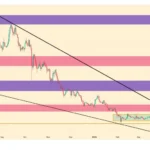
Following the PPI data we announced last minute of BTC We mentioned that it may experience a rapid decline. At the time of writing, BTC fell below $79,700. There is a risk that the shock decline will continue because the details of the report are disturbing. Moreover, the figures were much higher than expectations. This situation may be the trigger for the expected correction in the BTC chart.
Cryptocurrencies are falling
Yesterday’s CPI was high and now PPI was announced as 6 percent. This shows that the rise in CPI will continue due to the increase in producer costs. In other words, even if the Iran war ends today, annual inflation will be balanced. Fed’s It needs to keep interest rates at least constant for a long time.
US core producer prices, which exclude food and energy, rose 1% from the previous month in April 2026, reaching the highest level since March 2022, following an upwardly revised 0.2% increase in March, well above market forecasts for a 0.3% increase. On an annual basis, core producer prices rose to 5.2% in April from a 4% increase in March, above the expected increase of 4.3%.
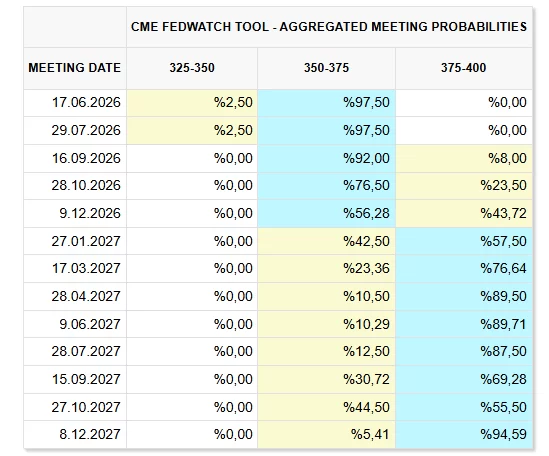
The current situation means that Fed interest rate cuts will now be postponed for at least 1 year. As a matter of fact, the market expectation is for an increase, not a discount, for next year. Therefore, there is a risk that the interest rate cuts at the end of 2025 will be reversed. Warsh will take office on Friday to restart QE, and with inflation rising so high while employment is strong, the possibility of making the cuts he has previously talked about has been blocked. Now cryptocurrencies are being squeezed from two arms on the macro front.
Details of the US PPI report
The US Bureau of Labor Statistics said in a statement today: Producer Price Index It reported a seasonally adjusted increase of 1.4 percent in April. The final demand index, excluding food, energy and commercial services, increased by 0.6 percent in April; This is the largest increase since the 0.6 percent increase in October 2025. In the 12-month period ending in April, final demand prices, excluding food, energy and trade services, increased by 4.4 percent; This is the largest 12-month increase since a 4.5 percent jump in February 2023.
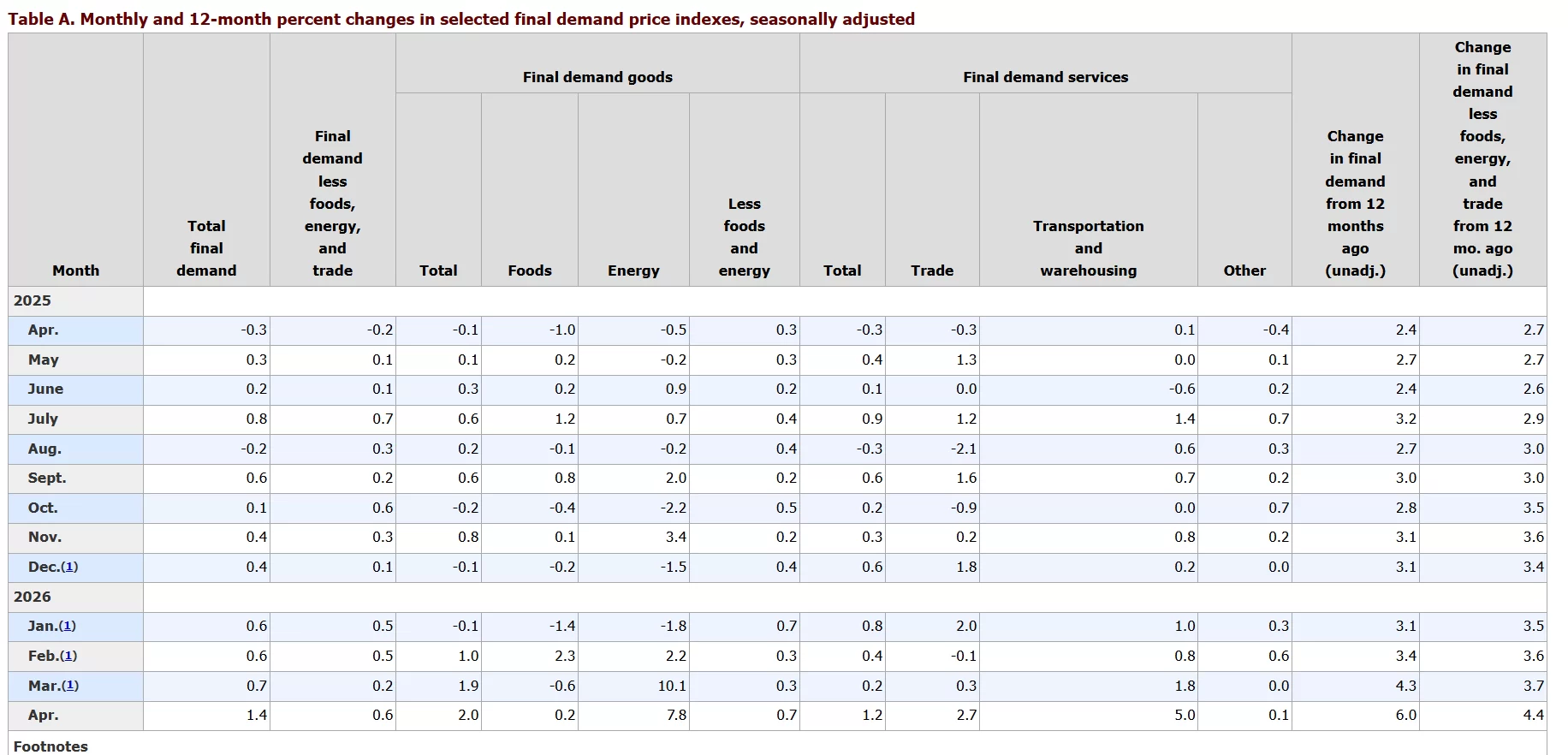
While monthly increases averaged between 0.2% and 0.4% throughout 2025, a period of regular increases began from the beginning of 2026 (January: 0.6%, February: 0.6%, March: 0.7%). This momentum, fueled by the Iran war, still continues. Following the huge increase of 10.1% in March, the energy item also increased by 7.8% in April. This double-digit trend in energy costs will shake the entire production and distribution chain.
We see that inflation is not only limited to energy but also affects the service sector. Additionally, the 1.8% increase in the Transportation and Storage item in March jumped to 5.0% in April. This shows that supply chain costs (freight, fuel, storage) became extremely expensive in a very short time, and this also triggered the 2.7% increase in the “Trade” item. This is what Fed members describe as “contagion risk.”
core inflation Its sticky nature indicates that the increase in inflation will be permanent in the long term, even if the Iran war ends. While the core indicator was 2.7% in April 2025 on a 12-month basis, it gradually increased every month and reached 4.4% in April 2026. While the Fed is so close to its 2% inflation target, such a reversal of things could cause Trump to suffer a major defeat in the November elections this year. As a matter of fact, this is against cryptocurrencies.