The US-Iran tension, which has completed its second month, still continues, and the US carried out its new attack on Thursday. He had already said that such a limited attack was planned to accelerate negotiations, and the USA also announced that this attack did not mean that the ceasefire had ended. But the long-term consequences of this tension continue to grow.
Inflation report will come
The Fed is an institution with a dual mission, focusing on the goal of 2% inflation and maximum employment. Trump’s immigration policy prevented the growth of unemployment despite the shrinking job supply, just as his team predicted, and limited the unemployment rate to 4.3%. Fed’s In the first of his two missions, he had nothing extra to do. In other words, there is no need for urgent interest rate cuts (due to employment) similar to those at the end of 2025.
But the Fed’s second duty, price stability, orders it to reduce inflation to 2%. This goal was being progressed with firm steps until the Iranian war started. However, the war caused the Strait of Hormuz to be closed, many oil production facilities in the region were hit, and storage capacities were targeted, which brought the oil price down to 120 dollars. This rise from around $70 has not yet reversed.
USA in oil price Due to the increase, inflation started to increase by around 1% per month. Moreover, it seems that this rise will continue in the next 3 months as energy inflation increases the cost of production and other items. Moreover, even if an agreement is reached today, it will take at least 3 months for the oil production capacity to return to its previous state and the prices to normalize (there are those who extend this to 1 year).
The US inflation report will be released on Tuesday. The monthly expectation is 3.7% annually, with a 0.6% increase. The expectation for Wednesday’s PPI is 4.9% annually, with a monthly increase of half a point. Since these figures for headline inflation point to levels in 2024, the Fed may even need to increase interest rates, let alone reduce interest rates.

cryptocurrencies When we face the reality of inflation on Tuesday and Wednesday, we will probably see a decline. Since concerns about this decline can be priced in advance, a sales wave that will start later today and accelerate on Monday will not be a surprise. Of course, cryptocurrencies love surprises.
Bitcoin decline target
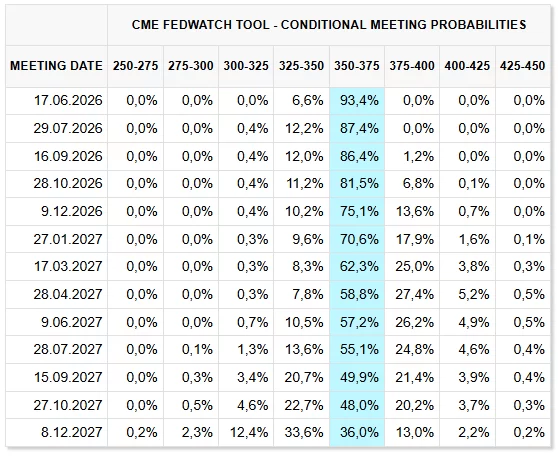
As you can see above, CME data says that interest rates will probably remain constant until the end of 2027, and even the potential for interest rate increases is dominant compared to the reduction. Considering the short-term decline possibility we mentioned in the first section and the profit-taking impulse triggered by the short-term rise, the easiest way seems to be below.
In his evaluation today, Michael Poppe shared the chart below and wrote that even if there is a rise, the price should retreat.
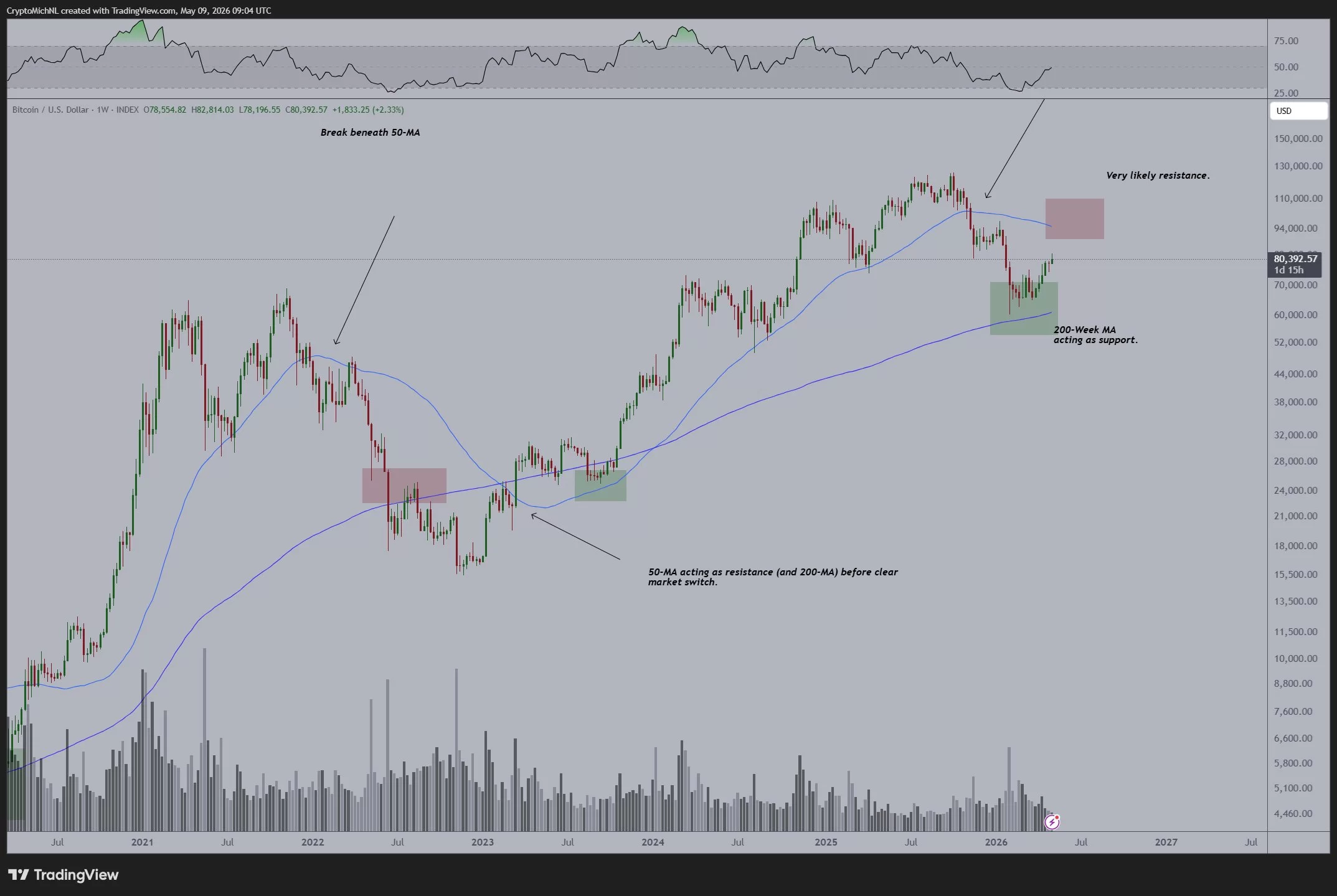
“Bitcoin There are two important resistance zones to follow. $86,000–$88,000. $93,000–$95,000 (at the 50-week moving average). During the initial rise of a bull cycle, resistance is encountered around the previous support level and/or the 50-week moving average.
This was also the case in the 2017, 2021 and 2024 cycles. Bitcoin may consolidate at the resistance level for a few weeks to wait for altcoins to rise. This is the period when you can start to recoup your losses or increase your profits.
After that, I wouldn’t be surprised if we retest a lower level at $70-75K before resuming the move higher.. “I think the bottom of the bear market has appeared.”