
US-based software company MicroStrategy continues to come to the fore with its new Bitcoin-focused name after its brand transformation at the beginning of 2025. The company purchased a total of 34,164 Bitcoins between April 13 and 19. This transaction was the organization’s third largest Bitcoin purchase in a week to date, bringing the total investment amount to $2.54 billion. The total amount of Bitcoin held by the company increased to 815,061 units, and the total cost of these assets was announced as 61.56 billion dollars.
Records in STRC funding and internal dynamics
During the acquisition process, MicroStrategy was driven largely by proceeds from the company’s perpetual preferred security, STRC. $2.18 billion was raised through STRC, and $366 million was raised from the sale of the company’s Class A shares. These funds coming through STRC caused new records to be broken on a weekly basis in the company’s history. In a single day on April 13, the volume of Bitcoin purchases made through STRC reached approximately 7,741 BTC. The following day, 14.4 million shares were sold, transacting the equivalent of 9,364 BTC. The total of the last two days indicated an increase of 518 percent compared to the four-week average.
The company also announced plans to pay a semi-monthly dividend to STRC holders. CEO Phong Le stated that this practice is unique in the world and emphasized that the dividend plan is unique and attractive for STRC investors.
In the statement made by the board of directors, “There was a target of 800 thousand Bitcoins by the end of the year, but this level was reached eight months ago. The market’s expectations were exceeded.”
Geopolitical winds and new resistance points in the Bitcoin market
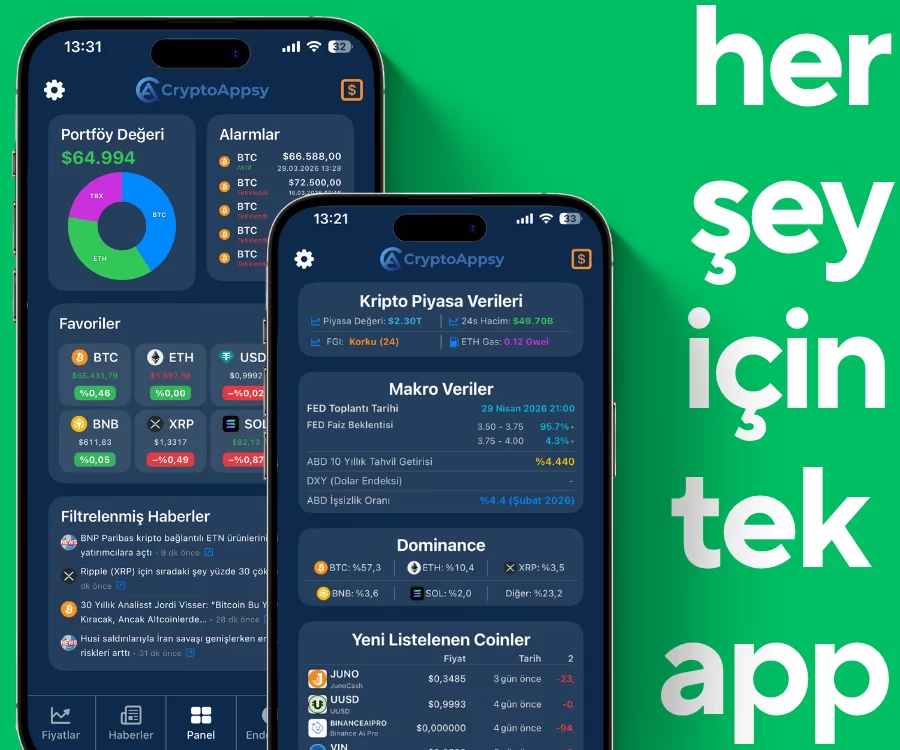
The week, along with the sudden escalation of tensions between the USA and Iran, also caused fluctuations in the Bitcoin market. While there was an increase of over 7 percent in oil prices, Bitcoin’s weekly close was in the green. However, the price rising to the $76,000 level shows that technically a number of important resistance points have still not been overcome. CryptoAppsy According to data, Bitcoin started the week around $ 76,000.
One of the key resistances that the market is focusing on is the $78,400 level located at the 21-week exponential moving average. While analyst Rekt Capital defines this point as an active rejection point, it is stated that the $ 77,300 gap seen in CME Bitcoin futures may trigger a new rise. The more critical level is the $81,000 band, which is the average cost for spot Bitcoin ETF investors in the United States. The average purchase cost for short-term investors is around $83,500. When sales are made at these levels, the profit-loss ratio is around break-even.
There was a total inflow of 25,000 BTC into US spot Bitcoin ETFs last week, with a record net inflow of $660 million in a single day on Friday. Despite this, the Bitcoin price has not yet reached the psychological threshold of $ 81,000.

CryptoVizArt, chief analyst of Onchain analysis platform Glassnode, states that Bitcoin has been trading below the average purchase cost of $78,200 for its major investors for more than 75 days, and that this trend is proceeding more smoothly compared to previous bear markets. “The signal is not ‘all is well’, it needs to be monitored carefully,” the comment stood out.
Quantum debate and Satoshi riddle in the future of Bitcoin
At the Paris Blockchain Week event, Blockstream’s CEO Adam Back recommended hardening bitcoin’s cryptographic infrastructure against quantum computers in a voluntary and backwards compatible manner. Following the recent research published in the New York Times, discussions about the real identity of Satoshi Nakamoto have flared up again. While Back denied the allegations, he stated that current quantum computers are not at a level that would threaten the security of Bitcoin and that this technology is at least 20 years away. However, he emphasized the importance of preparedness and explained that Blockstream is testing quantum-resistant signature technologies on the Liquid Network.
The debate was sparked by the BIP-361 proposal, which Bitcoin developer Jameson Lopp and his team published on April 14. With this proposal, the addresses that are vulnerable to quantum should be disabled within a 5-year calendar and the coins that do not move from these addresses should be frozen. It was stated that this application will affect approximately 6.9 million Bitcoins — including approximately 1 million coins attributed to Satoshi Nakamoto and 5.6 million coins that have not moved for the last 10 years. The proposal attracted great reaction in the industry, being described as “authoritarian and confiscatory”.
There have been significant advances in the pace of development of quantum computers in the last 12 months. Google’s Quantum AI team has reduced the number of physical qubits required to break the encryption algorithms used by Bitcoin by one twentieth, down to 500,000. Researchers at Caltech, on the other hand, suggested that quantum-resistant machines could emerge before 2030 if current advances continue. However, many experts think that updates to Bitcoin’s infrastructure require a long time and coordination, so the risk is still completely unpredictable.
In his speech in Paris, Adam Back stated that a post-quantum migration could reveal the total asset amount of coins thought to belong to Satoshi. “I think Satoshi is probably someone who doesn’t talk to the press and doesn’t use his name in forums,” he said. Meanwhile, it is stated that neither the industry nor the markets intend to wait for an answer to this question.