In recent months, a malware developed for cryptocurrency mining and theft has affected tens of thousands of devices. However, cyber attackers captured cryptocurrency The amount remained only around 6 thousand dollars.
Türkiye Also Targeted in Cryptocurrency Mining and Wallet Theft
cyber security company Doctor WebThe malware spread by disguising itself as legitimate software such as office programs, game cheats and online trading bots, according to a statement from Oct. The software targeted more than 28 thousand users in total, especially in Turkey, Russia, Belarus, Uzbekistan, Kazakhstan, Ukraine and Kyrgyzstan.
malware It secretly uses the processor resources of infected devices to mine cryptocurrency. Moreover, “clipperWith a function called “, it monitors the crypto wallet addresses copied by users and replaces these addresses with addresses controlled by attackers. With this method, the software was only able to steal a limited amount of cryptocurrency.
Doctor Web announced that the value of the cryptocurrencies stolen by the attackers was approximately 6 thousand dollars. However, it is unknown how much profit the creators of the software make from mining.
Bypasses Firewalls with Advanced Techniques
The software was found to use various techniques that make it difficult to detect. Thanks to password protected archives antivirus While avoiding scans, it disguises malicious files as legitimate system components and executes malicious scripts via legitimate software.
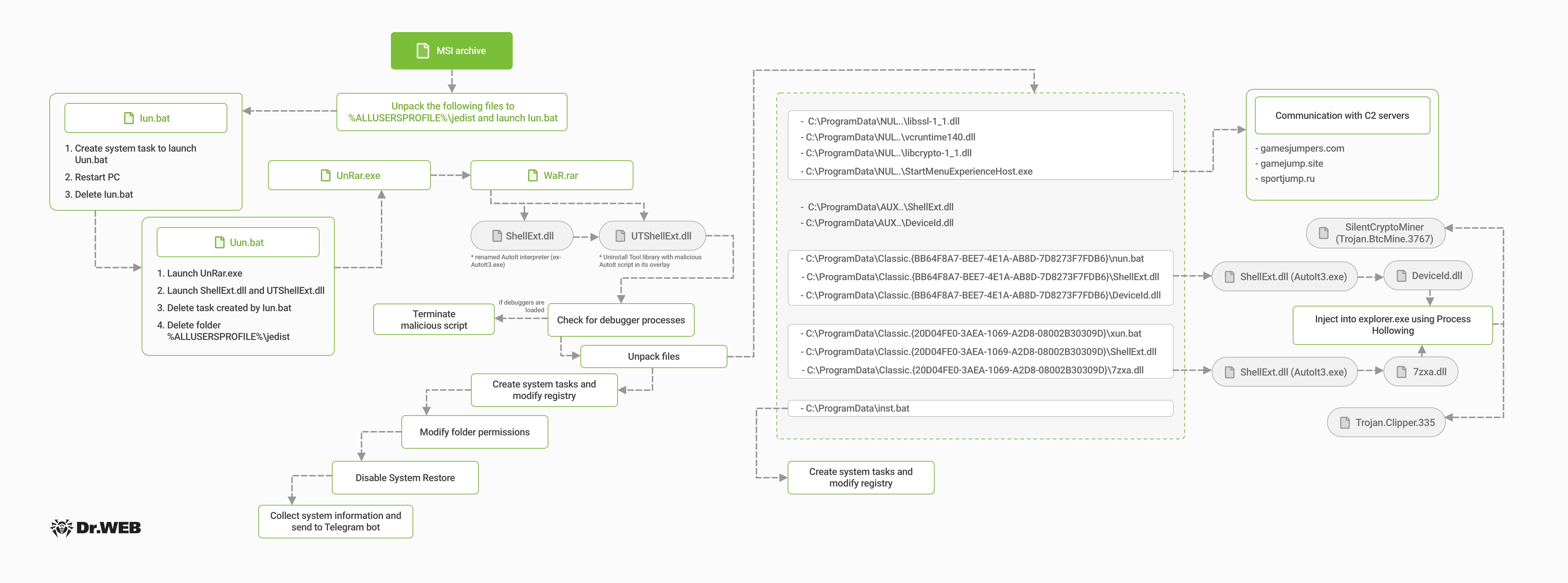
Cryptocurrency exchange in September Binancewarned about this malware called Clipper and stated that there was an increase in its activity at the end of August and announced that users were experiencing significant financial losses. Doctor Web stated that fake GitHub pages and malicious links in YouTube video descriptions played an important role in the spread of the software.
Cyber security company many users pirated software He suggested that he was putting his devices at risk by installing it and that software should only be downloaded from official sources.
Malware that alters cryptocurrency wallet addresses has been around for a long time and has become especially common following the cryptocurrency bull market of 2017. Such software is becoming increasingly sophisticated, often combining functions such as clipboard theft with other malicious actions.
Threat intelligence company in September Facctreported that scammers and malicious actors were spreading cryptocurrency mining malware using email auto-replies.
Disclaimer: The information contained in this article does not constitute investment advice. Investors should be aware that crypto currencies carry high volatility and therefore risk, and should carry out their transactions in line with their own research.