
The debate over the CLARITY Act has intensified, with stablecoin rewards and their potential impact on community banks becoming a major point of disagreement. Supporters say the available deposit data does not show stablecoins causing widespread deposit flight.
Sen. Cynthia Lummis pushed back against claims from some community banks that stablecoins are driving deposits away.
Deposit Data Tells A Different Story
She cited Bank of America data showing household deposits rising across income groups and FDIC data showing domestic deposits growing for a seventh consecutive quarter. Community banks reportedly recorded 5% deposit growth, outperforming the broader industry.
Lummis also stressed Section 404 of the CLARITY Act, which would prevent stablecoin issuers from paying interest-like rewards and prohibit marketing stablecoins as bank deposits or FDIC-insured products. She argued the provision is stricter than existing rules rather than a loophole for stablecoin yields.
According to her, community banks have been disappearing mainly because of industry consolidation. Around 2,000 community banks have reportedly been lost over the past decade, while only 62 new banks were created, with larger regional banks emerging as the main buyers.
She added that the Banking Committee has already included nine community-bank measures in a housing bill intended at improving deposit retention, alongside tighter stablecoin yield restrictions under CLARITY.
Stablecoins Could Help Banks Too
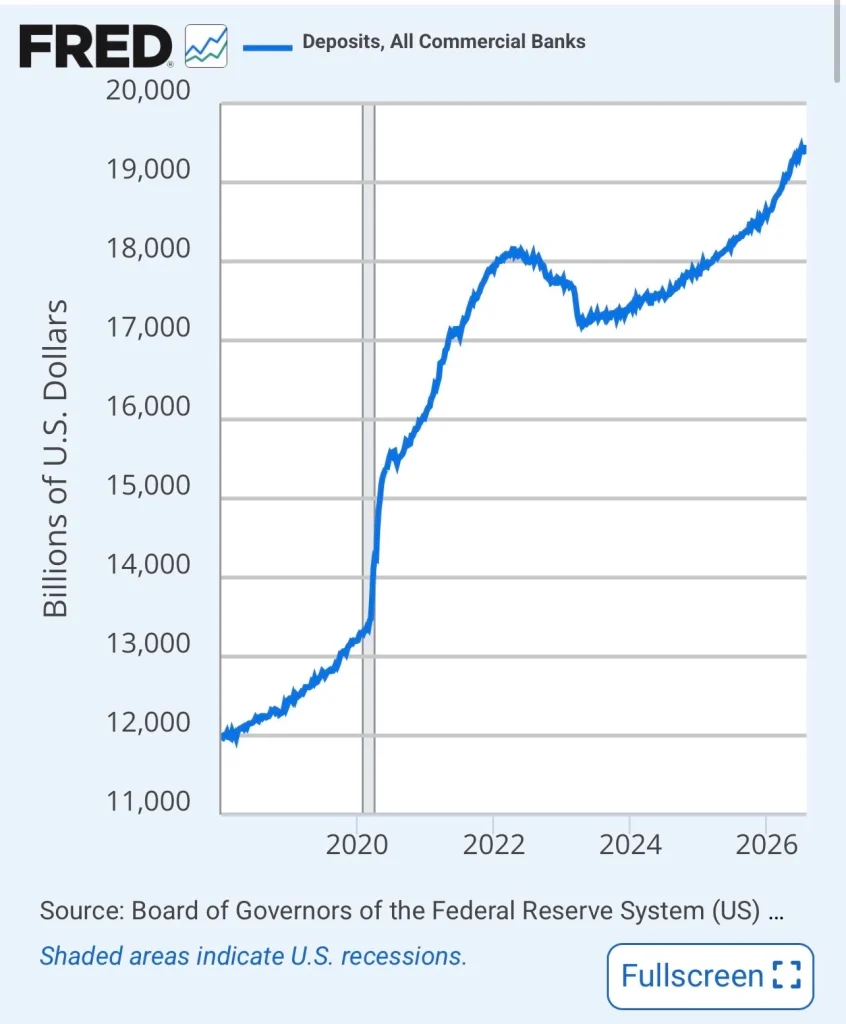
Analyst, James E. Thorne similarly argued that historical deposit data does not support the claim that stablecoin yields are responsible for deposit losses. U.S. commercial bank deposits increased from roughly $12 trillion to $19.4 trillion, while the 2022–23 decline coincided with higher interest rates and banking stress.
Faryar Shirzad said community banks need regulatory relief and better tools, but restricting stablecoin rewards will not address their core problems. He argued stablecoins could instead give smaller banks access to cheaper payment infrastructure and new customer services.
The September Question
On the other hand, Vincent Van Code warned that restrictive US rules could push activity toward crypto-friendly markets such as Europe or Japan, where users could potentially access stablecoins and yield products.
With the next major CLARITY Act deadline approaching on September 15, the central question remains whether lawmakers can resolve the stablecoin and banking dispute without pushing the industry or capital overseas.
Was this writing helpful?
Story Ends Here
Trust with CoinPedia:
CoinPedia has been delivering accurate and timely cryptocurrency and blockchain updates since 2017. All content is created by our expert panel of analysts and journalists, following strict Editorial Guidelines based on E-E-A-T (Experience, Expertise, Authoritativeness, Trustworthiness). Every article is fact-checked against reputable sources to ensure accuracy, transparency, and reliability. Our review policy guarantees unbiased evaluations when recommending exchanges, platforms, or tools. We strive to provide timely updates about everything crypto & blockchain, right from startups to industry majors.
Investment Disclaimer:
All opinions and insights shared represent the author’s own views on current market conditions. Please do your own research before making investment decisions. Neither the writer nor the publication assumes responsibility for your financial choices.
Sponsored and Advertisements:
Sponsored content and affiliate links may appear on our site. Advertisements are marked clearly, and our editorial content remains entirely independent from our ad partners.
Read the Next News