
Bitcoin price After falling below $78,800, it increased by nearly a thousand dollars at the time of writing. The decline, albeit weak, is dominant in cryptocurrencies in general. Cryptocurrency investors realized that they could no longer ignore the reality of inflation with today’s PPI data. So what do analysts say?
Bitcoin, others and the Fed
Kevin Warsh was confirmed as Chairman of the Federal Reserve by Senate vote. However, as one of the 12 members, he also has 1 vote, and while the reports are like this, it is not possible for the majority of the members to support him. Moreover, we have not seen Fed Governors dissenting from the majority view to date. trump He has been swearing at Powell since he took office, but with today’s data, it looks like he will insult Warsh from now on. The Fed has 2 missions. Price stability and employment. The unemployment rate is reasonable and the immigration policy has worked. However, inflation is rising sharply and it is very difficult to recover in the short term.
Centiment Intelligence In today’s report, he looked at the glass half full and compared BTC with other assets. While BTC gained 20% in the last 3 months, SP500 increased by 8% and Gold increased by 6%. There’s a reason of BTC It is possible that it reached the bottom of the cycle and rose in these 3 months. However, Santiment analysts seem optimistic for 2026 and beyond.

“Yes, BTC has suffered a significant pullback since its all-time high of $126,000 last October, but the cryptocurrency market’s largest market-cap asset has rebounded nicely amid tensions in the Middle East and uncertainty surrounding initiatives like the Clarity Act.
“Despite the increasingly negative narrative towards cryptocurrencies from the mainstream media, the numbers paint an optimistic picture for 2026 and beyond, pointing to continued strength and wider adoption.”
If Warsh makes statements confirming the outlook on the macro front (he will take the seat on Friday), Santiment may be proven wrong for 2026 and beyond.
bitcoin cycle
Although everyone says that the negativity in the macro outlook will pull cryptocurrencies down, there are also those who are stuck in the cycle. The analyst with the pseudonym CryptoCon says that the same things have been repeated for years and the same thing will happen again. Drawing attention to the business cycle, which has been the biggest counter argument against the Halving Cycle since the cycle peak in October 2025, the name discussed Global PMI data.
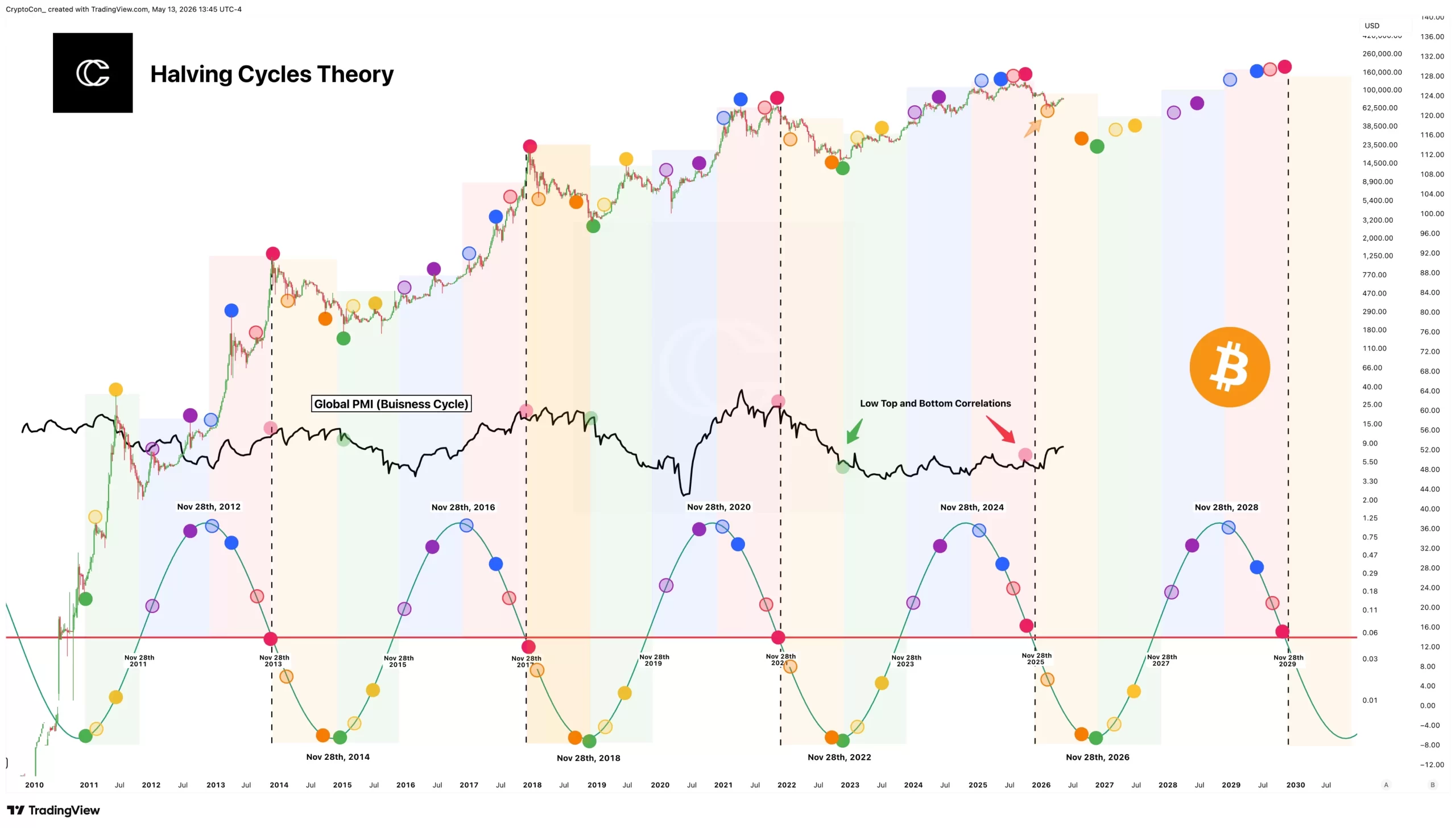
“The sine waves at the bottom represent the Halving Cycle Theory, which states that Bitcoin moves around the first Halving (November 28), creating a 3-year bull market and a 1-year bear market. This theory marks 11 significant highs and lows (dots on the chart), including the bottoms and tops of the cycle, giving a 3-month window for each to occur in its own year. There has been no significant deviation or break in this cycle to date in Bitcoin’s 16-17 year history.”
In general, the business cycle has a very low correlation with the Bitcoin cycle. Cycle bottoms and tops occurred at almost random points, and while the business cycle remained almost flat from 2022 to 2025, Bitcoin experienced a bull market as normal. The Halving Cycle is very much alive and well, and the Business Cycle is in no way apt to replace it.”
In summary, what he is talking about is that the deterioration in the macro economy does not mean much for Bitcoin. Some analysts do not take seriously the analysts who expect a decline, saying that BTC moves around liquidity, hype, and cycles.
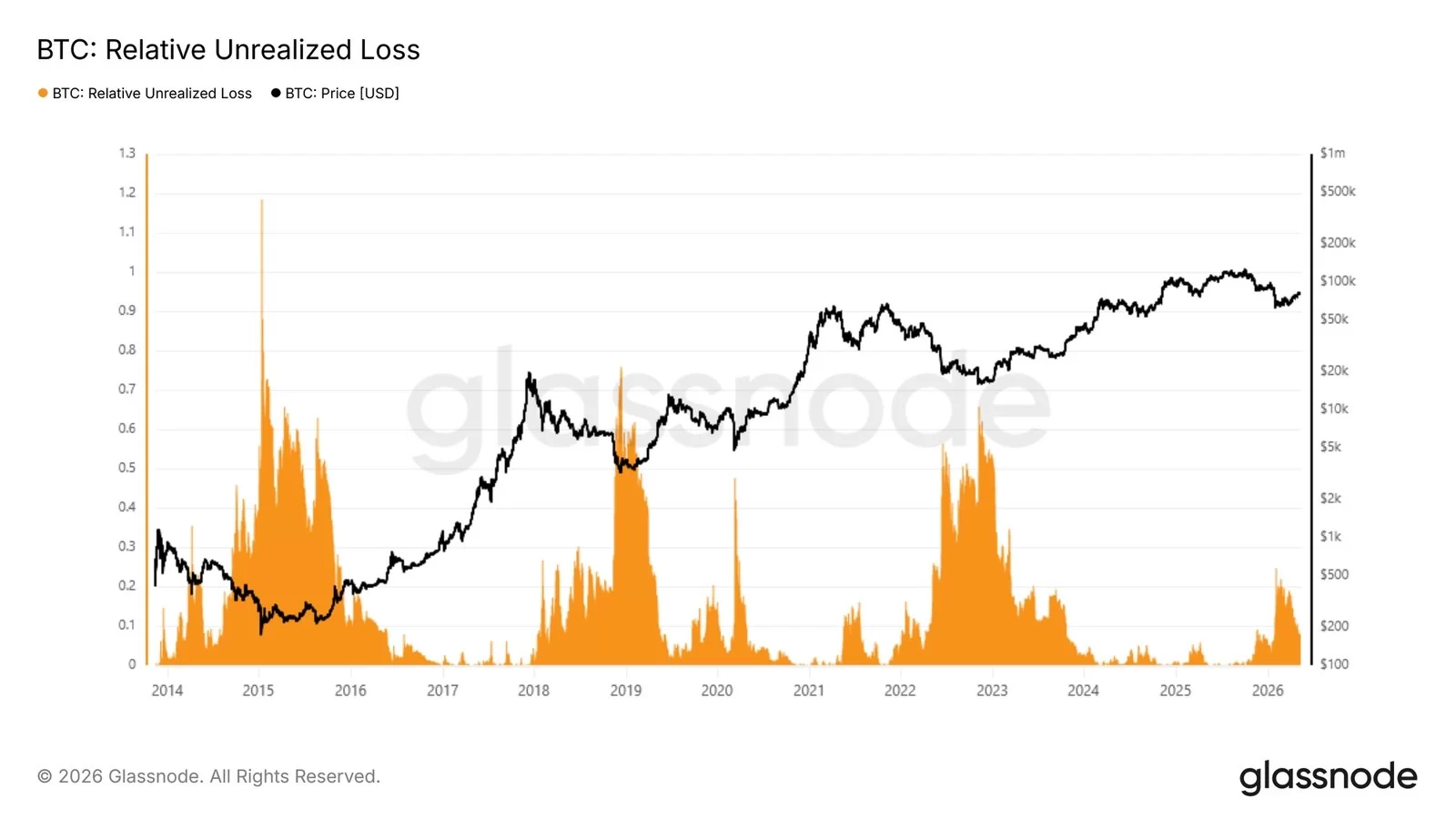
Kyle also says BTC remains strong despite the risk of stickier inflation, rising interest rates and tighter monetary policy.
“Unrealized losses on the network peaked at close to ~25% during the February crash and are now stuck at ~8% after reclaiming $80k. That’s a pretty rapid recovery in price action.
And if $60,000 remains the cycle low… This would be the shortest BTC bear market in history.”