With today’s US employment reports, expectations regarding interest rate policy have taken shape. Although Trump appointed Warsh to lower interest rates, inflation is increasing faster while employment is strengthening, and both developments Fed’s obliges it to keep interest rates constant. The protracted Iran conflict keeps the oil price at 3-digit levels, feeding energy inflation and the cost increase triggered by its secondary effects.
Fed forecasts
Economist Nick Timiraos is one of the world’s leading financial institutions and research companies.Fed) shared his current predictions regarding interest rate decisions and revealed how the expectations regarding interest policy are shaped.
For example, Bank of America expects a July 2027 interest rate cut and is one of the institutions with the most hawkish expectations. Barclays does not see discounts before March 2027. BNPP, Deutsche Bank, HSBC, JP Morgan, MPA Macro, RBC predict that interest rates will remain stable for a long time.
There is a serious difference of opinion among banks. While some (BofA, Barclays) do not expect discounts until 2027, others (Citi, MUFG) expect aggressive discounts in the second half of this year. The majority of those expecting an early discount point to September 2026. Citigroup and MUFG are the most optimistic institutions with a total discount of 75 percent. However, it should not be forgotten that these expectations can change rapidly. Since current predictions are shaped in an environment of increasing inflation, strengthening employment and the prolonged war in Iran, expectations may also change as conditions change. Even the possibility of an increase in US interest rate futures in 2026 is priced in.
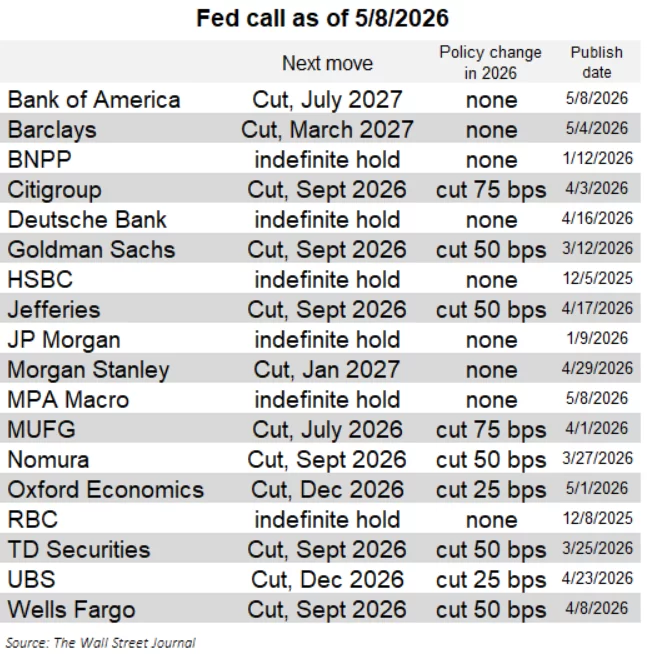
“Following the release of April employment data, more investment banks and Fed watchers are eliminating or postponing rate cuts from their forecasts.” – Nick Timiraos (WSJ)
Some investors say, “Low interest rates have never led to inflation; this is where Warsh will take drastic measures. Low interest rates helps growth; “We will need it when this ‘collusion’ in Iran is over,” he says. Their motivation has more to do with the cost of the US debt.

Consumer confidence at rock bottom
Michigan Consumer Confidence Index today it reached a record low of 48.2. This confirms how growing concerns about high prices affecting personal finances and conditions for major purchases are reducing consumers’ confidence in the economy. So in summary, consumers do not expect their financial situations to improve or the US economy to strengthen, neither in the short term nor in the long term.
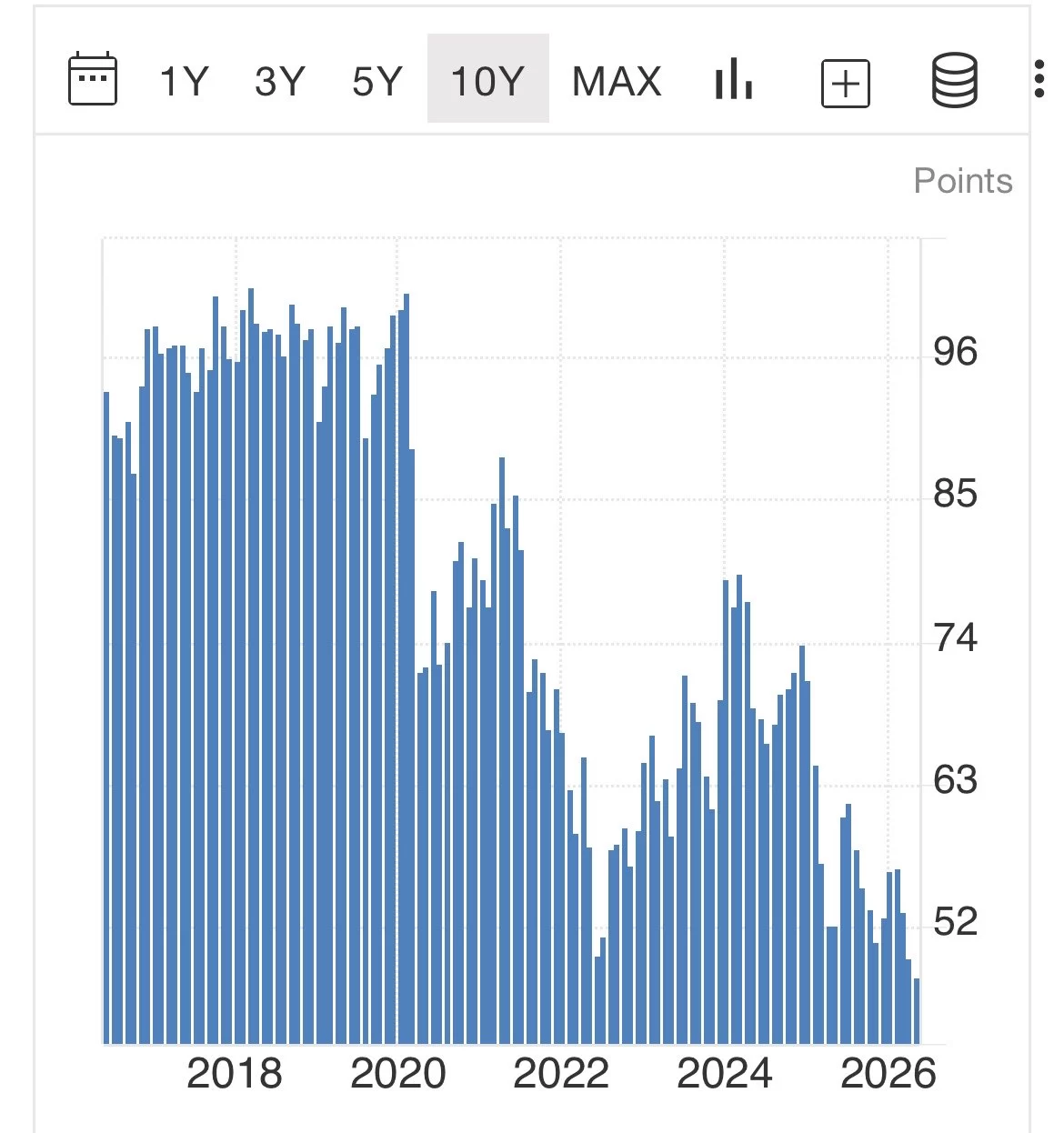
As consumers become increasingly pessimistic about the future, the risk of their expectations coming true also increases. Consumer confidence hasn’t been hit this hard in a long time, and this situation is troubling for risk assets, including cryptocurrencies.
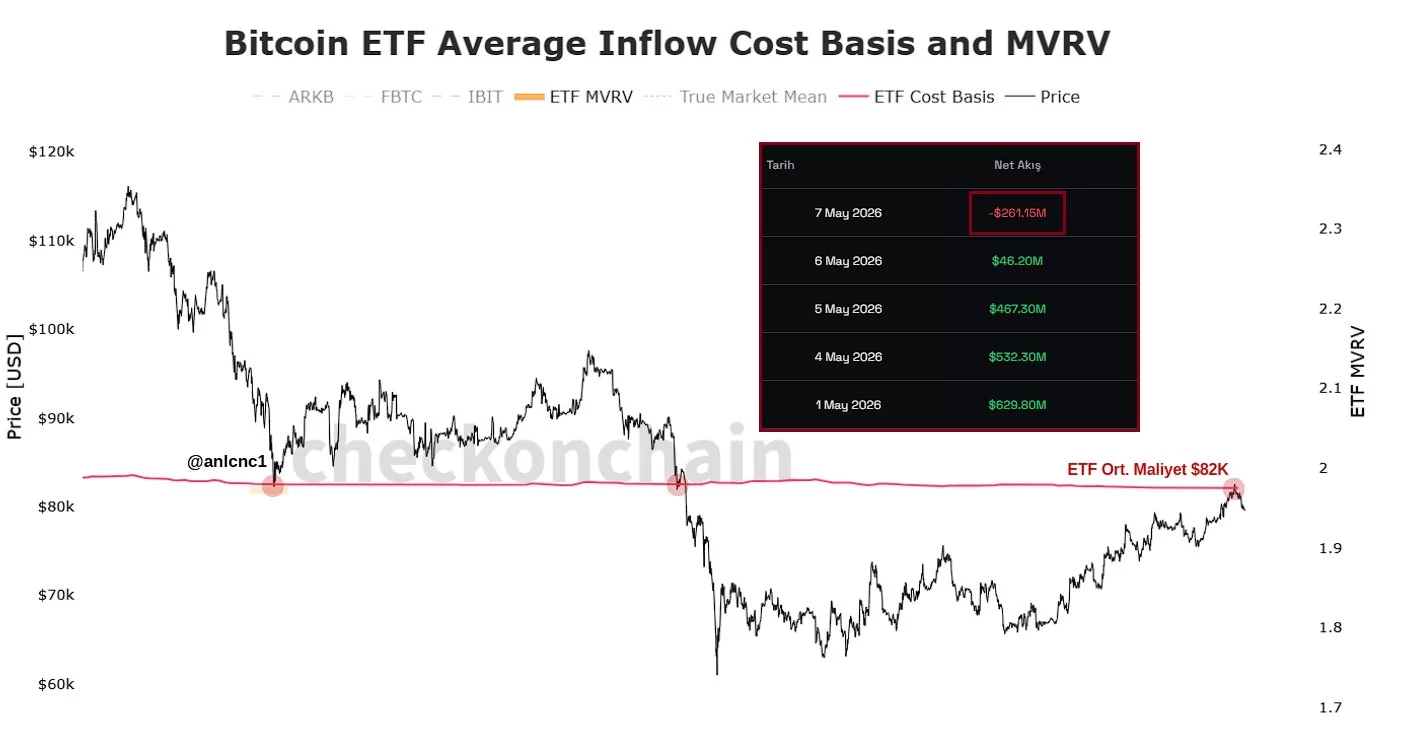
@anlcnc1 weakness today ETF He attributed it to the sales motivation of holders who made a profit, including investors.
“There was an outflow of $261 million from Bitcoin ETFs yesterday. I think some of the boomer crowd who were approaching the cost said “give us a break, we can’t handle the stress of this place.”
Let’s see how long the bulls will endure this. The current chart shows that risk markets cannot find support on the macro front. BTC is unable to defend $80,400 and this, combined with all other risks, could pave the way for new lows at least by the end of the week. The first test may be at $78 thousand.