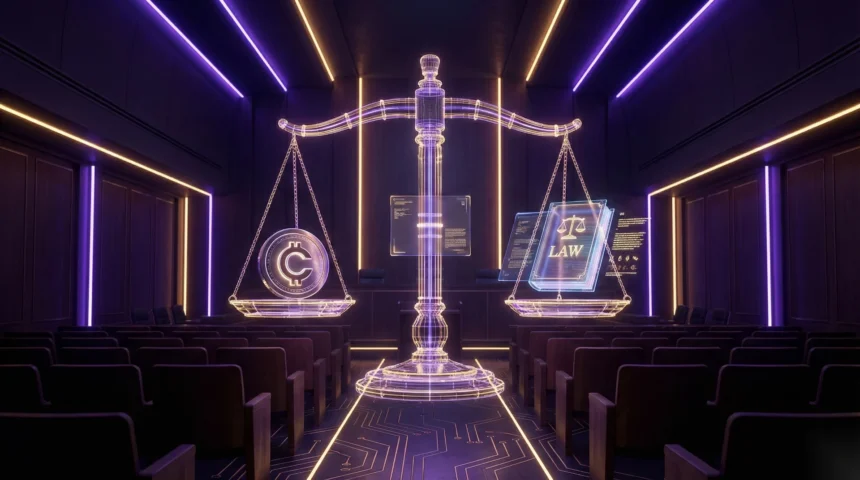
US Securities and Exchange Commission (SEC) Chairman Paul Atkins offered a new approach to legal uncertainties in the cryptocurrency space. According to the statement made on March 18, 2026, a safe harbor arrangement is planned for crypto projects. This initiative marks a marked turnaround from the period of legal pressure that has primarily affected US-based developers in recent years.
New Scope of Assurance and Categories
As a financial bureaucrat at the head of the SEC, Paul Atkins has been managing regulatory processes in the capital markets for a long time. In his last statement, he stated that they will offer a temporary protection period for digital asset projects. Within the scope of this regulation, four main asset categories; Digital commodities, digital collectibles, digital instruments, and payment stablecoins will be excluded from securities laws.
Projects outside these topics will be exempt from securities testing processes for a certain period of time and time will be given for the projects to be decentralized. This step adopts a “build first, then adapt gradually” approach to projects in the sector.
Paul Atkins states that projects that do not fall into the defined categories can also operate with a temporary transparency obligation; Thus, the risk of legal pressure is eliminated during the development process of the projects.
Additionally, the new rules reviewed by the commission envisage a structure that allows certain brokerage firms to hold both crypto assets and traditional financial products at the same time. This was considered as a step that would provide ease of storage and handling.
Reflections on the Market and Distinctive Developments
The new assurance process greatly reduces legal risks for US-based token issuers and exchanges. In particular, the new regulation provides legal clarity for platforms like Coinbase, where listing any tokens previously threatened litigation.
Dr. Martin Hiesboeck stated that a special assurance process will come into force in the coming weeks, facilitating registration and disclosure for tokens that fall into the security category and offering exemption for up to 5 years.
One of the areas expected to be most clearly affected in the industry is spot crypto ETFs. In particular, the spot ETF application for Solana was blocked because the SEC had previously considered the SOL token a security. It is stated that this obstacle can be quickly eliminated by classifying SOL as a digital commodity or tool after the new category regulation created by Atkins.
Beyond all this, the risk premium and the pressure on the price in public opinion regarding crypto assets are expected to decrease. Many token prices, which have been low for years due to legal uncertainty, are expected to move upwards with the assurance environment.
As a result, the cost of capital for crypto projects is falling, while a period of comprehensive repricing appears to have begun in the industry.