Ethereum founder Vitalik Buterin is one of the most important names in the cryptocurrency world. Although not as big as Nakamoto, he is a big name because he played a role in the birth of the biggest altcoin. Buterin’s comments are closely watched by the cryptocurrency community, and he didn’t have many good things to say about layer2 solutions today. The days have now come when the Ethereum mainnet is centralized.
Layer2 and Vitalik Buterin
In previous reviews Arbitrum layer2 solutions like of Ethereum Buterin said that it is important for many people to get better. layer2 It even gave rise to the layer3 platform. Moreover, many steps have been taken to make layer2 solutions cheaper.
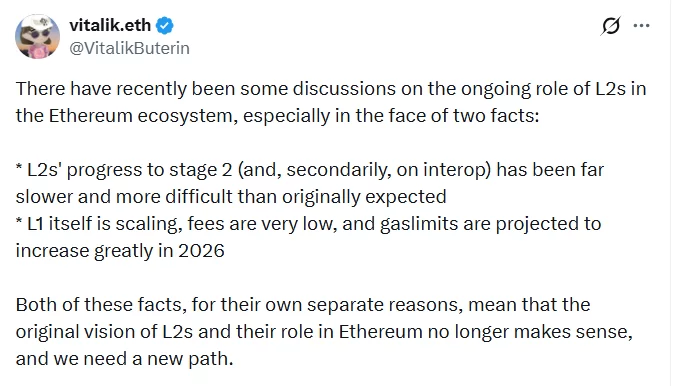
In his post today, Vitalik wrote:
“There has been some debate lately about the continued role of L2s in the Ethereum ecosystem, particularly in the face of two facts:
* The advancement of L2s to phase 2 (and secondarily, interoperability) has been much slower and more difficult than initially expected.
* L1 itself is scaling, fees are very low, and gas limits are projected to increase significantly in 2026.
These two facts show, each for separate reasons, that the original vision of L2s and their role in Ethereum no longer makes sense and we need to take a new path.” – Vitalik Buterin
The issue he discusses in detail is also an important negativity for layer2 tokens. What about Arbitrum and others if Buterin is saying that without separating even the largest layer2 solutions of the network they are of little use anymore?
Although ARB seems to have fallen only due to the decline in general market sentiment for now, Buterin’s statements will have negative consequences in the long run.
Layer2 Altcoins
Already struggling with high token inflation, many Ethereum layer2 tokens and their investors are now in even more trouble as Buterin appears to have abandoned them. Now that Ethereum is scaling, Vitalik says they are no longer needed.
“First, let’s recap the original vision. Ethereum needs to scale. The definition of “Ethereum scaling” is the existence of a large amount of block space backed by the full trust and credit of Ethereum – that is, the block space where if you do something within that block space (including ETH), your activities are guaranteed to be valid, uncensored, irrevocable and untouchable as long as Ethereum itself is running. If you create a 10,000 TPS EVM, whose connection to L1 is mediated by a multisignature bridge, you have scaled Ethereum.” you won’t.
This vision no longer makes sense. The L1 does not need the L2s to be “branded shards” because the L1 itself is scaling. And L2s are unable or unwilling to meet the specifications required of a true “branded shard”. I’ve even seen at least one of them openly say that they may never want to get past phase 1, not just for technical reasons related to ZK-EVM security, but also because they have to retain ultimate control due to their customers’ regulatory needs. This may be the right thing for your customers. However, if you are doing this, it is clear that you are not “scaling Ethereum” in the sense that the rollup-centric roadmap means. But that’s okay! “That’s okay, because Ethereum is currently scaling directly on L1, and major increases in the gas limit are planned for this year and in the coming years.” – Vitalik Buterin
ARB,OP, STRK Then, the multi-billion dollar layer2 economy was thrown into long-term uncertainty with Buterin’s statement “we are scaling the main network”. Many of you may remember that we once saw popular crypto applications seemingly breaking away from Ethereum by launching their own layer2 network. Then everyone started starting their own networks, but most of them turned into ghost networks. With Arbitrum etc., many major Ethereum scaling solutions emerged and made huge debuts.
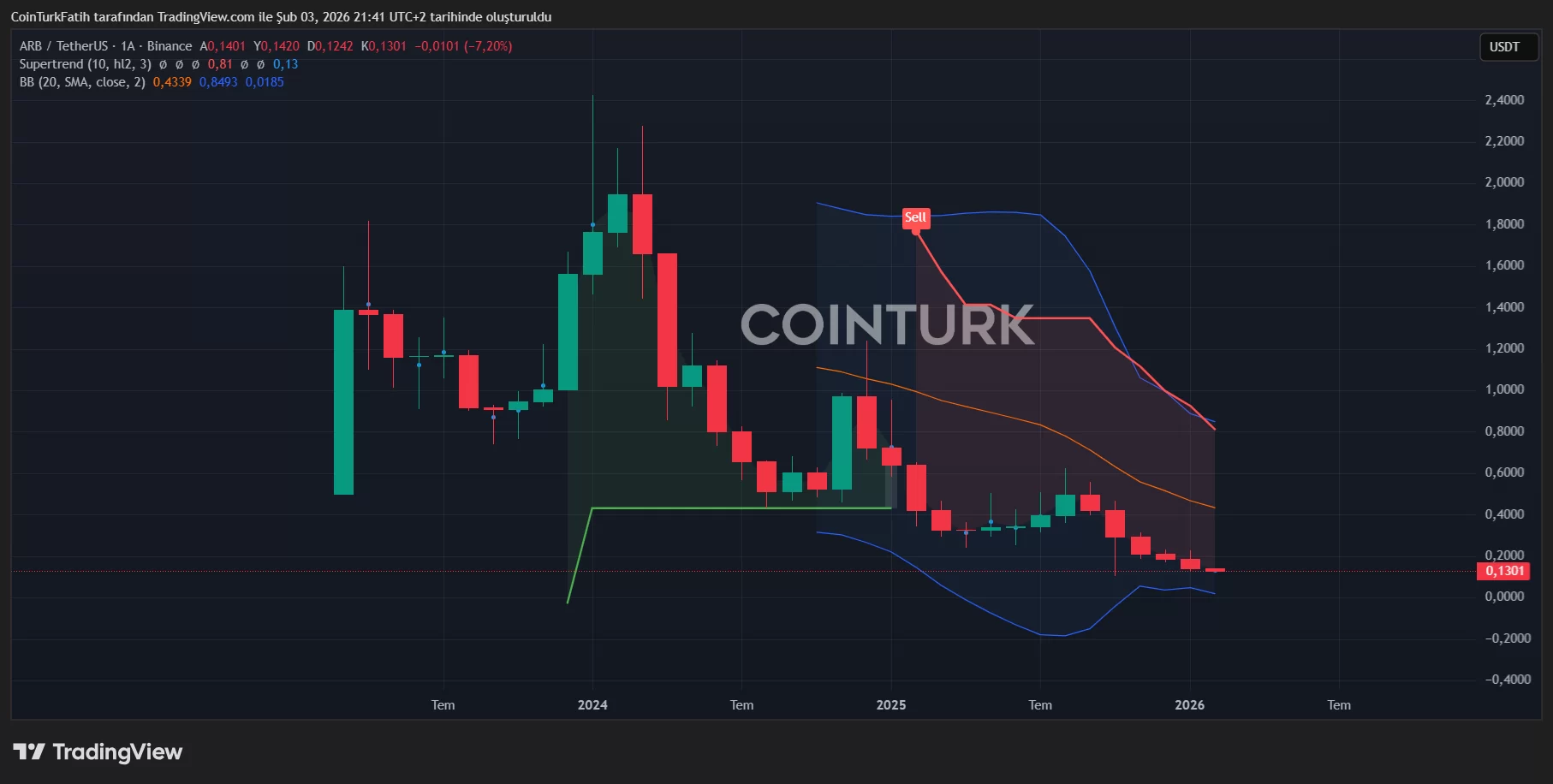
Then, they lost a lot of blood with the lack of interest in cryptocurrencies and the latest Bitcoin-centered upward trend. At this point today, altcoins, which are already worn out, are also taking a hit because they are layer2 tokens. We are in the worst season for altcoin investors. As an example above, you can see the monthly chart of ARB, it is like a ladder going down.