
Bitcoin  $87,013.63 When we mentioned that this week would not start well for , the price was still over 90 thousand dollars. Now the expected decline has begun and BTC dropped to $86,674. The 7-day period, which we called the risk-off week, was against the bulls for many reasons. Now we will remember the reasons again and take a look at the latest statements made by Williams from the Fed.
The Reason for Bitcoin Fall
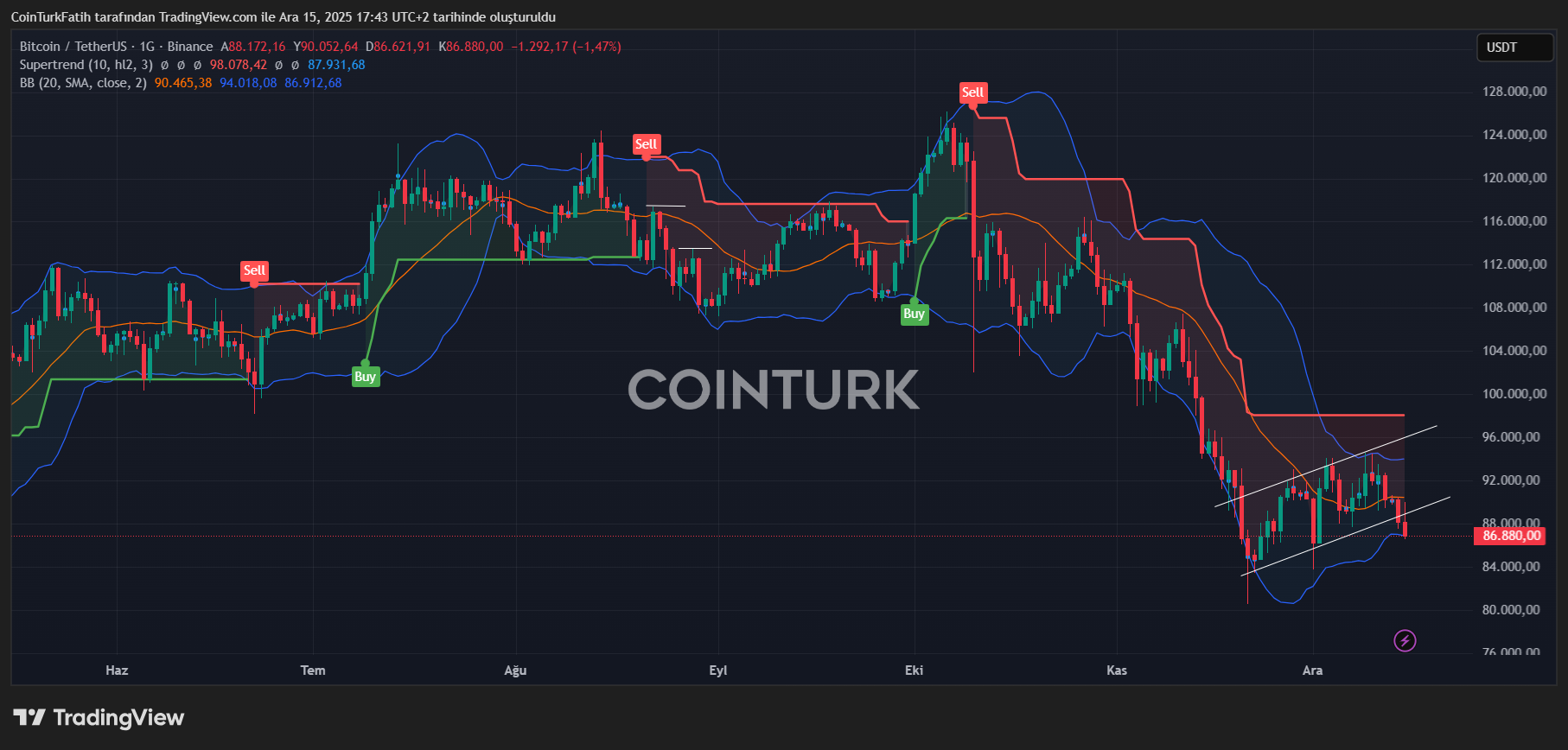
The EU Foreign Minister just mentioned that China uses its economic ties as a weapon for political gains. Williams made statements supporting monetary easing and BTC It dropped to levels of 86 thousand dollars. Bitcoin The drop in price was already expected. Closings below $88,000 mean the loss of key support, and the fact that the bear flag below has now been broken heralds deeper bottoms to the bears. Even below $80 thousand is possible in an oversold environment.
- Japan will likely raise interest rates on Friday.
- USA this week inflation and employment figures will be announced.
- In cryptocurrencies As it was the end of the year, volumes decreased and appetite decreased.
- BTC technical outlook is negative.
Above all, investors’ lack of appetite as there would be a lot of things going on this week created the necessary environment for the bear flag on the chart to break down. of For those following along, this is no surprise because we already warned that this is what we would see for the above reasons and more.

The important highlights of Fed member Williams’ statements are as follows:
“The data suggests to me that the effects of trade policies have increased inflation this year, but that these effects have been milder and more long-lasting than I initially anticipated. As a result of the tariffs, progress toward the FOMC’s long-term inflation target of 2% has temporarily stalled, and the latest inflation figure is virtually unchanged from a year ago, at about 2-3/4%. While it is not possible to measure the effects of trade policy measures precisely, my estimate is that these measures have contributed about half a percentage point to the current inflation rate.”
I don’t see any signs that tariffs are contributing to runoff or other spillover effects on inflation. In particular, broad-based supply chain bottlenecks have not emerged, housing inflation has fallen steadily, and measures of wage growth point to a continuing gradual slowdown. This is consistent with reports from Region Two. Many of my business contacts in this region have noted that although tariffs continue to increase input costs, the pace of price increases has slowed somewhat.
Most importantly, inflation expectations remain solidly stable. The New York Fed’s Survey of Consumer Expectations (SCE) shows that inflation expectations remain within their pre-Covid ranges. This is an issue I follow closely, because firmly fixed expectations are crucial to ensuring low and stable inflation.
Looking ahead, I predict that the tariffs will largely be a one-time price level impact, with the full impact expected to be realized in 2026. I predict inflation will fall slightly below 2.5% next year and reach the FOMC’s long-term target of 2% in 2027.
As for the unemployment rate, I estimate it will rise to approximately 4.5% by the end of this year, reflecting some additional effects of the government shutdown. Based on a forecast of above-trend GDP growth, I predict that the unemployment rate will gradually decline over the next few years.
So, after a year of uncertainty, we will begin 2026 with resilience. The economy is poised to return to solid growth and price stability.
However, as 2025 shows, the path may change in unpredictable ways. In assessing the future course of monetary policy, my views will, as always, be based on the evolution of the totality of data, the economic outlook, and the balance of risks to achieving our goals of maximum employment and price stability. “We must be ready to adjust course when necessary to achieve our goal.”