
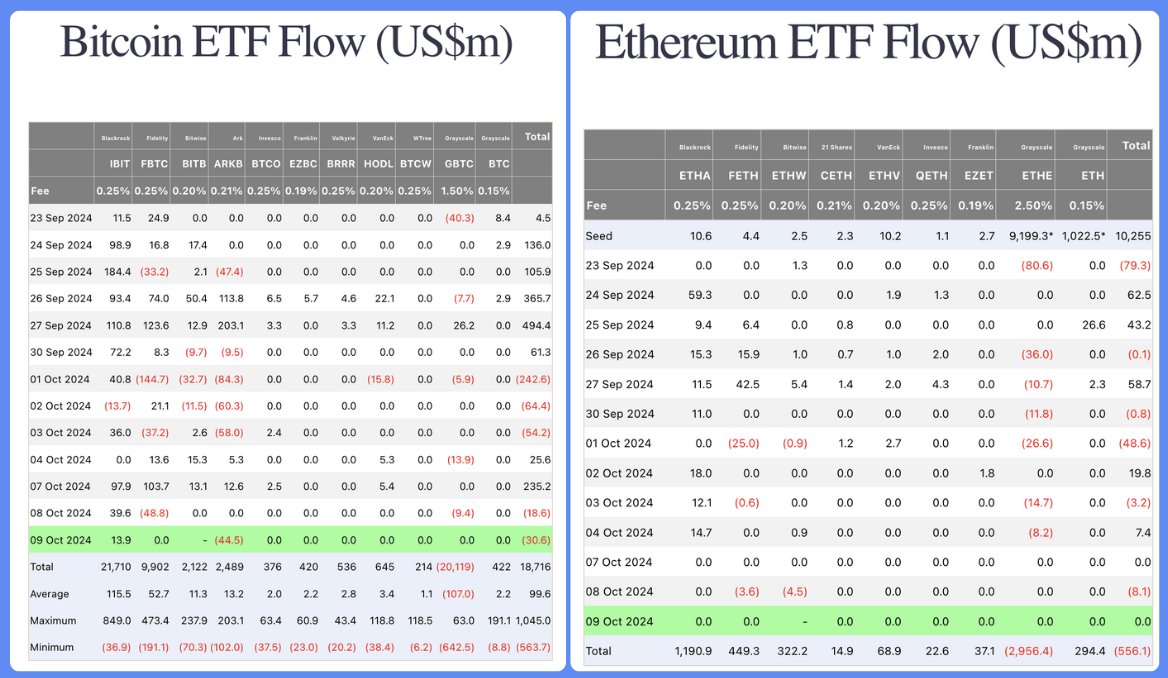
Bitcoin  $62,122As the price of (BTC) retreated to critical levels at $60,000, the spot Bitcoin ETF market also faced a slight net outflow increase. On October 9, there was a net outflow of 105 BTC (worth $6.5 million) in a total of 10 spot Bitcoin ETFs. In particular, Fidelity’s FBTC ETF attracted attention with an outflow of 787 BTC (worth $48.55 million). Meanwhile spot Ethereum
  $2,429 There was a total outflow of 3,442 ETH (valued at $8.32 million) from ETFs, and the largest outflow in this area occurred in the Bitwise Ethereum ETF with 1,865 ETH (valued at $4.53 million).
Spot Bitcoin ETFs Draw Attention with Net Outflows
Bitcoin price falling ETF Activity was observed in the market. According to the latest data, especially FidelityThere was a significant outflow led by ‘s spot Bitcoin ETF, FBTC. It is stated that Fidelity’s total assets are currently 178 thousand 778 BTC (worth approximately $11 billion).
It is thought that these outflows may be linked to investors taking short-term profits or acting to avoid risk in the face of volatility in the price of the largest cryptocurrency.
Spot Ethereum ETFs Have a Similar Outlook
There is a similar picture on the Ethereum side. on 9 October spot Ethereum ETFThere was a net outflow of 3 thousand 442 ETH from ‘s and the total value of these outflows reached 8.32 million dollars.
Bitwise Ethereum Its ETF made the biggest outflow, losing 1,865 ETH (worth $4.53 million). The increase in ETF outflows in line with the general market trend of Ethereum can be attributed to investors taking a more cautious approach to uncertainties in the market.
These net outflows in recent days have cryptocurrency marketIt shows that their sensitivity to increasing volatility has increased and they are reconsidering their positions. Developments in spot Bitcoin and Ethereum ETFs continue to be important signals for market participants.
Disclaimer: The information contained in this article does not constitute investment advice. Investors should be aware that crypto currencies carry high volatility and therefore risk, and should carry out their transactions in line with their own research.