cryptocurrencies He could not return to his own agenda. This is the hardest part of emerging as a new asset class. While last year should have been a year of rise due to delays in tariffs and interest rate cuts, altcoins It was oppressive for. We used to see crypto’s unique agenda causing price volatility. Today, we monitor the ships passing through the Strait of Hormuz and follow the missile alerts of the countries in the region. Fitch Ratings has issued a warning about the latest developments, crypto investors should also take heed.
Fitch Ratings Iran War
One of the world’s largest credit rating and research institutions Fitch Ratings Today, he discussed the risks of prolonging the Iran war within the framework of “demand disruption”. War has primary and secondary effects. Even though there are thousands of kilometers between the USA and Iran, global markets bring the distances closer. The price of oil is above $100 and analysts say that by 2026 oil prices will average $100/barrel and global stock prices will fall by about 10%.
The details highlighted by analysts in the negative scenario are briefly as follows:
“Additionally, this scenario assumes that U.S. 10-year Treasury yields will rise 50 basis points, spreads of U.S. investment grade bonds will widen 100 basis points, and spreads of U.S. high-yield bonds will widen 200 basis points compared to our baseline scenario. Inflation after four quarters and GDP The impact on will be +1.4 points and -1.2 points respectively. Fitch’s March Global Economic Outlook base case forecasts 3.0% inflation and 2.2% GDP growth in 2026.”
Already, airlines around the world are feeling the pressure of triple-digit oil prices, as jet fuel accounts for 20% of the cost.
“Most North American carriers have not fully hedged their fuel exposure, leaving them vulnerable to continued price increases. JetBlue and WestJet are most at risk due to limited rating margin. In contrast, the response in North American natural gas prices has been relatively limited despite the rise in global LNG prices, as most of the U.S. liquefied natural gas export capacity is already contracted.”
Fitch’s global chemical industry outlook is also deteriorating due to the price increase in petroleum products. The automotive industry, on the other hand, faces pressure in the undermining of purchasing power and high fuel interest rates.
The increase in construction materials and interest rates may also increase housing inflation. Stating that demand contraction in consumption sectors is possible due to inflation affecting household budgets, Fitch Ratings has already revised the outlook in some sectors from neutral to the “deteriorating” label.

Helium is critical for semiconductor manufacturing, and prolonged shortages are forcing manufacturers to cut production to higher-cost alternatives. The Strait of Hormuz is one of the main transit points for many important substances, including fertilizer and helium.
Negative scenario in cryptocurrencies
BTC It has been falling since November 13th and has formed the second downward step. Soon either this step will go down one more level or we will see a recovery from here. If there is no “new regime” in Iran as the USA claims and we will not see an agreement in the short term, this step is about to break. BTC may soon drop to the $60-45 thousand range. Is the bottom of this range tested? It is difficult to predict this, but rising inflation, rising interest rates, shrinking economy, and global interest rate hikes starting a tightening cycle may bring about more sales in cryptocurrencies.
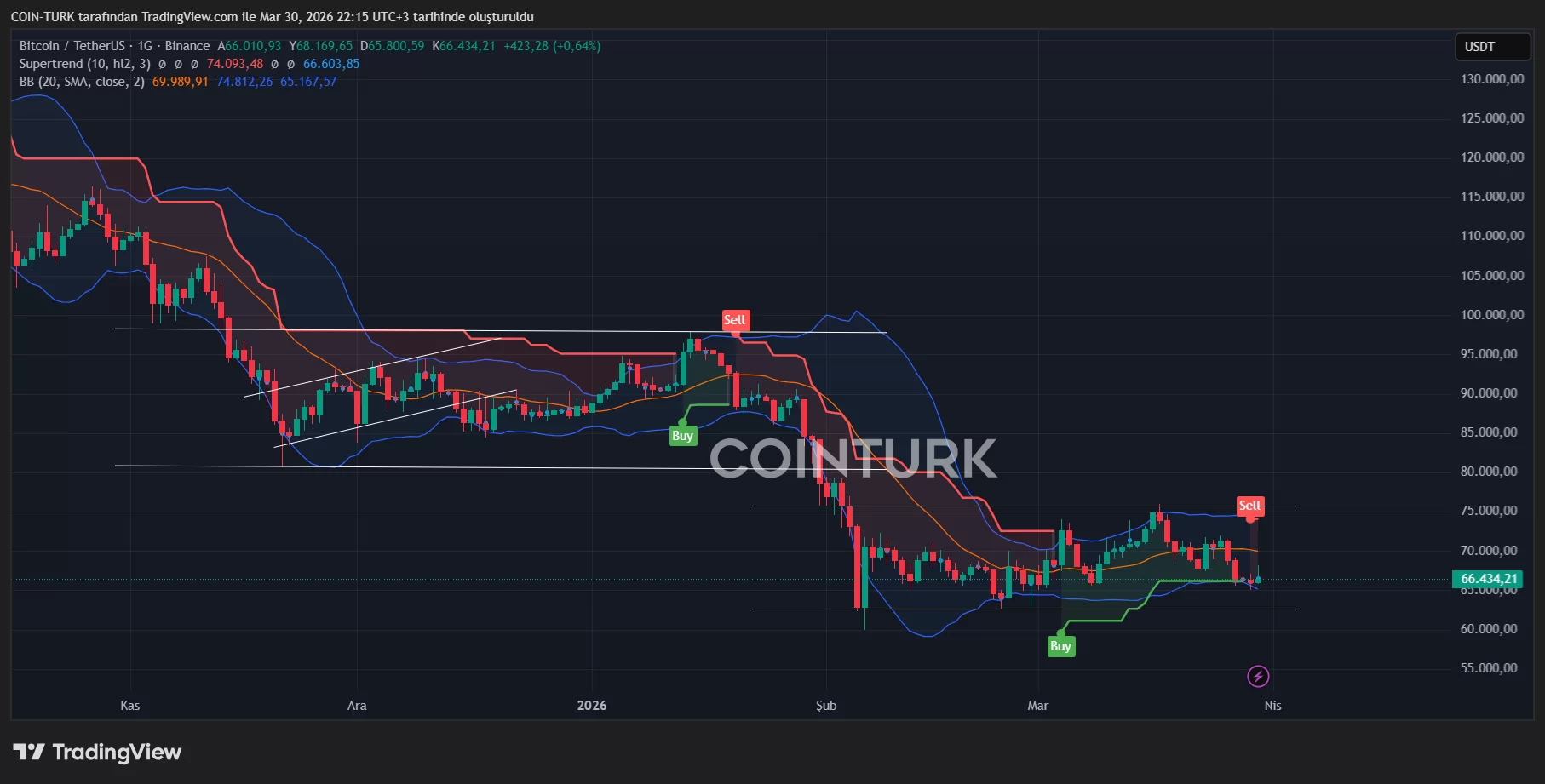
Worse still, a decline in the US stock markets could pull crypto down due to the positive correlation in the decline, as they are not already far from the top (luckily, crypto has been moving away from the top for a long time).
Even if an agreement is reached today, it will take more than 2 months for the effects of the war to disappear, so in any case, cryptocurrencies may be facing difficult times in 3-4 months.
One surprise could be that the Fed lowers interest rates by 50bp this year “according to a limited rising inflation scenario” due to slackening demand. This is a positive step to avoid stagflation.
from BlackRock Rieder said this at the time the article was being prepared;
“The Fed should lower interest rates and I think it will” – CNBC Interview.