
While the cryptocurrency markets were making an active start to 2026, a technical update from the Pi Network attracted attention. The project’s core team has released a new tool that allows developers to integrate Pi payment systems into their applications in less than 10 minutes. However, contrary to expectations, this development has not yet provided a meaningful acceleration to the price of Pi. Despite the general recovery in the market, Pi has remained flat in recent weeks.
Rapid Integration Support for Developers from Pi Network
According to a blog post published by the Pi Network team on Friday, the new developer library significantly simplifies Pi payment integration. This library combines the Pi SDK with the backend APIs into a single package, eliminating complex installation processes. Thus, developers can spend more time developing their applications instead of dealing with payment infrastructure.
The team emphasizes that this step is part of Pi Network’s long-term vision. The goal is to create a utility-oriented Pi ecosystem with applications that are “usable, practical and ready for real-world adoption.” In the first stage, JavaScript and React-based frontends will be compatible with Next.js and Ruby on Rails-supported backends. This means that many applications that already use these technologies can quickly integrate Pi payments.
The Pi Network team, which went through an intense process for the community in 2025, underlined that they will continue to develop in 2026 and invited developers to contribute to the ecosystem.
Why Is Pi Price Stagnating?
Despite technical advances, Pi Network’s native token remains silent in terms of price. While many altcoins experienced double-digit increases in the first week of January, Pi could not keep up with this wind. Although short-term green candles were seen, the price could not break through the $0.22 level and is currently trading just below $0.21. There is almost no clear movement on a daily, weekly or monthly basis.
One of the reasons behind this is the supply side. The daily average number of tokens to be launched in the next 30 days is around 4.5 million, putting pressure on the price. Unlocking expansions, which sometimes approach 5.5 million units, have the potential to increase short-term sales pressure.
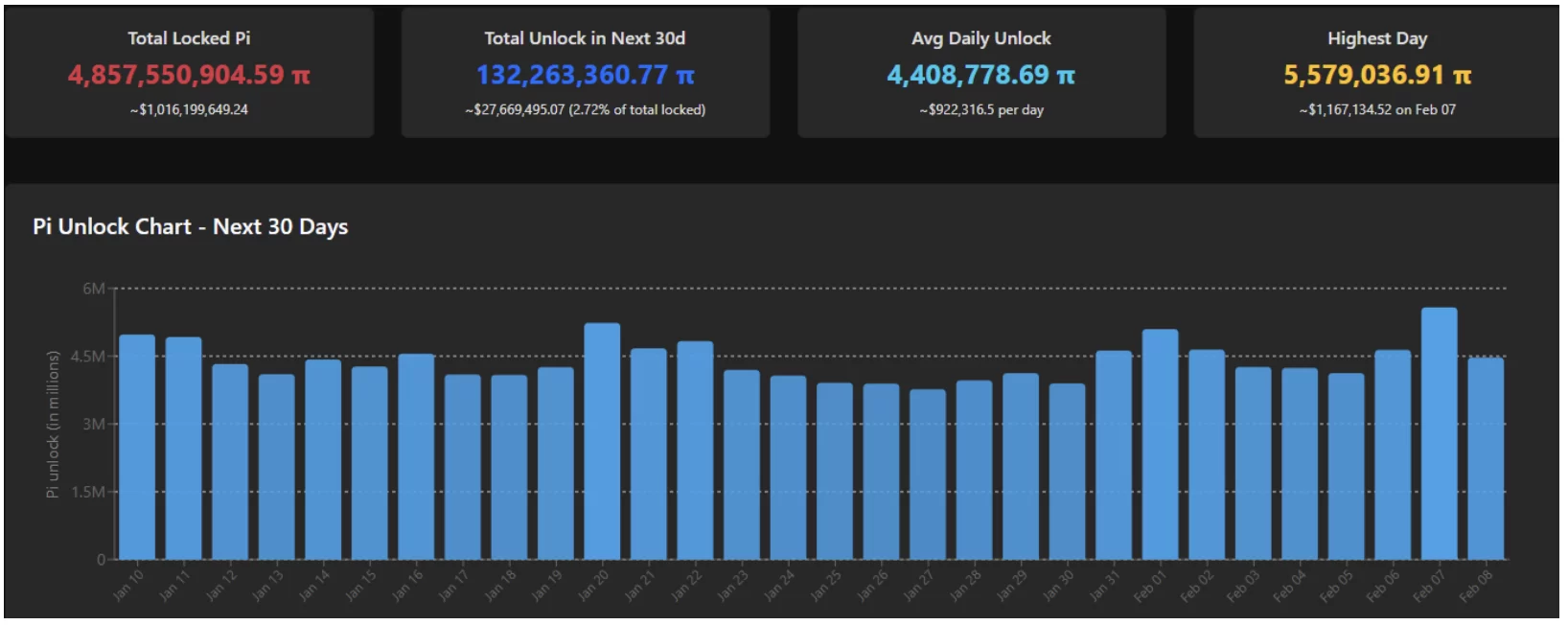
This step taken by Pi Network stands out as the right move to expand the ecosystem from a technical perspective. However, infrastructure development alone is not enough for prices to rise in the short term in crypto markets. It may not be surprising that the Pi price remains flat for a long time unless the actual number of users, application diversity and concrete usage scenarios increase. While 2026 will be the “building” year for Pi Network, it seems that investors will want to see more concrete results.